When we first met, the thing that caught my eye was your long, painted nails.

I've always liked having well-groomed nails and I've always been interested in cosmetics, so these nails, unconventional for a bloke, are, you could say, a reflection of that. Back in Konin, where I'm from, I couldn't really get away with it, as you can imagine. Moving to Poznań gave me the freedom to experiment. I started with a subtle shine, and before long I was sporting nail extensions longer than any of my female colleagues at work. These days they're a bit shorter, but still noticeable.

How do people react to them?

At work, and I've held several jobs, reactions have been mostly positive, particularly from women, who enjoy complimenting me and asking questions, often noting that they'd love nails like that themselves. When I worked in the beauty industry, my nails were practically a selling point. I also get occasional social media comments. People are curious about my nails and why I have them. They sometimes ask about them in comments to photos posted on social media by my boyfriend, Arek. So yes, there's definitely interest, and no one has ever been rude to my face about them.

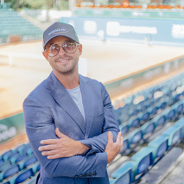
Not even at the Lech stadium, where Arek and you go to watch matches?

Not even there, though I can tell from people's faces and stares that they are, shall we say, intrigued. When my nails were longer and painted, I caused quite a stir among checkout cashiers when placing items on conveyor belts. But times change, and these days painted nails on a man barely raise eyebrows, especially in Poznań.

Did your mum like them?

She did. When she first saw them, she said she'd love a set like that herself, though a bit shorter. She's never insisted I cut mine down, always supportive, always on my side. Much like my boyfriend, who has never been fazed either, though I suspect he'd prefer them shorter.

And what are these nails actually made of?

When I had extensions, they were gel. You apply it with a mould, cure it under a lamp, and paint it any colour you like, which for me is always almost natural.

Are they hard to live with day to day?

It's a matter of getting used to. There are both downsides and upsides. For instance, they are tricky for picking up coins, but perfect for flipping bacon in a frying pan!

Are they part of your queer identity?

Honestly, I've never really framed it that way before, but now that you mention it, I suppose they are. I definitely feel more queer with them, though other aspects of my look might suggest that as well.

When did these queer elements appear in your life?

I can't pinpoint the exact moment I realised I was gay. It certainly became part of my identity during secondary school. It was gradual: at first, I thought I might be bi, and even had heterosexual relationships, including a girlfriend with whom I still get on well. Yet even in middle school I had this gut feeling that I was different. It was in fact there even in primary school, though at the time it wasn't something I really knew, I wasn't aware of anything. Others seemed to notice though - they'd call me names and shove me around, which wasn't difficult as I've always been skinny.

Did you bring it up at home that you were being bullied?

I did, and my fierce mum would immediately storm off to school, demanding that those responsible be punished.

Did your parents have any inkling of why this was happening?

I'm not sure. When I came out much later, my mum said she might have suspected something, though she was still surprised, which in turn surprised me, because to me it felt so obvious.

Do you have any siblings?

Yes and no. I'm an only child, but I have honorary siblings. My mum has a sister who is my age, technically my aunt, but for all intents and purposes, she's always been more like a sister to me, and we're still very close. Then there are the two daughters of my mum's partner. One of them is my age; we met back in middle school, and it was actually through the two of us that our parents met and ended up together - they still are today.

You appear to have an incredibly strong bond with your mum.

She's my best friend. I've always been able to tell her everything - well, almost everything. My relationship with my dad, though, has had its ups and downs, and my parents' divorce while I was in middle school certainly didn't help. There were good and bad times, including periods when we barely spoke. These days we hardly keep in touch at all.

Why?

When I finally came to terms with my sexuality and what it meant for my life, I remembered how my dad, and other family members, reacted to gay people on TV, and the kind of language they used, even towards me. I realised I couldn't accept that. My mum, even before she knew I was gay, would react immediately every time she heard any crude, homophobic remarks: "Don't say that!", she'd snap, short and sharp. As for my dad, I eventually reached a point in life where I thought: if someone doesn't accept or respect me for who I am, there's no point pretending. It's better to sever ties and in fact it's simply more honest. I should add that I've never openly discussed my sexuality with my dad; he found out about me on Facebook.

We'll come to that shortly, but I'm curious: did you ever explore the Konin gay scene?

Not really. Only now, years later, am I discovering through Facebook and Instagram that this or other person is actually gay. Back then, I had no idea and long believed I was the only one.

Hang on, you were born in 1998, so by the time you were a teenager in the 2010s, the Internet was already well established.

True, but I was more of a withdrawn, guarded, sensitive type. I'd never have dared reach out, even though everything inside me was bubbling. Eventually, it was my friend who took the risk and made the first step. I was eighteen at the time. My had broken up with my girlfriend, ending my belief that I was bi. I was starting a new chapter in my life, which also coincided with me moving to Poznań.

Was Konin not a good place to be?

It was, but only up to a certain age. I had loads of friends, amazing mates. We were close, we partied and studied together. I also spent a huge chunk of my time practising contemporary dance, which I learned for several years at the Konin Cultural Centre. I loved it, but sadly, that chapter ended rather dramatically when I suffered a displaced fracture of the femur. I ended up in a wheelchair and basically had to relearn how to walk, so a professional dance career was no longer in the cards.

How did that Facebook coming-out go in 2023?

My partner posted a photo of us on Facebook sitting together and holding hands at the Lech stadium, with the caption: " (Not) football brings us together, but I took him to the match," followed by a few little hearts. Arek asked if he could post it and I agreed. Only after the match did I realise this was essentially my public coming-out.

Who had already known before that?

My mum, my grandparents on my mum's side, and my mum's partner, along with his family.

How did those who hadn't known react?

I received loads of likes and hearts, even from relatives on my dad's side of the family, but not from him.

Didn't he call?

No, which, of course, is a reaction in itself. A negative one. And yes, it hurts.

You mentioned that your mum already knew. How did that come about?

I told her. After I moved to Poznań, I invited her over for a weekend, determined it was time to come clean. She accepted. I picked her up at the station and took her to my flat in the Winogrady district, which I shared with a female friend. We sat down, and I was terribly nervous. She could sense it and got anxious too. We both sat there on pins and needles until I finally blurted out: "I'm gay." We cried, downed some beer, talked for hours, and later went to Duże Lokum on Półwiejska Street, the now-closed queer club run by Arek Kluk.

Did you start studying and working in Poznań right away?

Yes, that was the condition for moving out. Mum said she'd support me as much as she could, but the money she sent wasn't enough to live on in Poznań, so I needed to find work quickly. I studied from morning to afternoon and then worked from late afternoon into the evening, at first, naturally, in the restaurant business.

Was Poznań an obvious choice for someone from Konin?

It was, for fairly obvious reasons: it's close, has good universities, and also, some of my friends had already moved there a year earlier, having graduated from comprehensive high schools while I was still in technical school, which takes an extra year to complete. They'd already blazed the trail and I simply followed in their footsteps.

What sort of technical school was it?

It was part of the Mikołaj Kopernik School Complex. I chose hotel management, graduated as a hotel technician and later went on to study commodity science at the Poznań University of Economics.

Why not continue with hotel management or tourism?

Hotel management was typically offered at private universities, which I couldn't afford. Besides, by that time, I was very much into cosmetics and wanted to major in something related. I discovered that the University of Economics offered a commodity science specialisation at graduate level, but to get in, I needed a bachelor's degree. That's how I ended up studying commodity science, and I actually learned a great deal. In the end though, I never enrolled in a graduate programme - life just swept me away.

When did this passion for cosmetics begin?

Back in middle school. I started doing my mum's make-up and also that of my female friends, and being gay, I had plenty of female friends. I practised, learned to do make-up, discovered more about cosmetics, and, after moving to Poznań, started doing my own subtle make-up as well, which I still wear today.

Did you eventually start doing make-up professionally?

At first, I did make-up for women for special occasions. Later I applied to Sephora. I imagined it'd be a part-time job where I could gain experience and get access to better, more expensive products. Instead, it turned into a full-time job at the Poznań Sephora, first as a make-up consultant, and eventually as sales floor manager and specialist. I didn't love the sales part of it. What really interested me was make-up training. Sephora offers fantastic learning opportunities, top trainers, travel, and access to premium cosmetics. I took advantage of that more than once, including a training trip to Paris.

So why did you leave Sephora after three years?

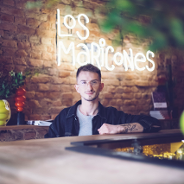
Because I had to choose to either stay with Sephora or build my own business with Arek. I chose the latter, and last autumn we opened Los Maricones, a gay bar in the Jeżyce district.

You founded it not just as business partners but also as a couple. How long have you been together?

We met at a party in Lokum on Półwiejska Street, the same place I took my mum after coming out. I already knew that Arek was the manager and president of Stonewall Group. I'd taken part in the pride marches he organised in Poznań. At first, he was a nodding acquaintance. But in 2023, something sparked between us. I began turning up at the new castle venue of Lokum more often, and when I invited Arek over for dinner one evening, he stayed till breakfast. A few months later we moved in together, and we're still living together now. I've had a few flings before, but this is my first serious relationship.

Does your mum like Arek?

Very much, they get on brilliantly. I also have a good relationship with Arek's parents. My mum knows them too, and whenever everyone visits Poznań, we spend lovely time together. We live in the same Jeżyce townhouse where our bar is located, so we literally go to work in our slippers. And when we switch on the neon sign and crank up the music and people start drifting in, we sip cocktails and laugh, and I find myself thinking that queer Poznań really is amazing.
What can a neighbourhood councillor do?

Act as a voice for local residents.

And what does acting as such a voice entail?

Whenever the city puts forward proposals, be it for pavement construction or changes to a tram route, it invites our feedback. In our role as elected councillors, we review these proposals and respond accordingly: offering our backing, voicing objections, or recommending adjustments through formal resolutions, which express our opinions. While the city is not bound by these opinions, they are generally expected to be given due consideration as a matter of good practice, particularly as they reflect the views of the residents, which in my case are those living in the Jeżyce district. The council may also put forward its own ideas, highlighting concerns such as disruptive noise or areas that may pose safety concerns and that require particular attention.

Do you have a budget to draw on?

We do, although it is relatively limited compared with the city's overall funding. Even so, it is sufficient to support smaller-scale improvements and host a handful of social and cultural events each year, including "Summer in Jeżyce'. It is worth noting that part of this funding comes from parking fees collected in the neighbourhood.

Are residents interested in elections for the housing estate council?

The turnout in Jeżyce in the most recent elections was roughly four percent, which is undeniably low. That said, we're not disheartened and remain hopeful to see an improvement. There's still a great deal to be done to boost public awareness. It's vital for residents to understand that elections don't stop at the level of mayor or city council - neighbourhood councils exist too, and they are arguably the closest to everyday concerns. Much of our work focuses on seemingly minor issues that, taken together, make a tangible difference to the quality of life: an even pavement, a bicycle stand, a newly planted tree, a nice playground, or a comfortable bench.

Is this your first term as a councillor?

Yes, it is - I'm currently in my third year. My involvement began quite unexpectedly, following a chance encounter on the street with someone running for the council. That's when I discovered the existence of neighbourhood councils and became curious. I attended a few sessions of the Jeżyce Neighbourhood Council, which are open to the public, and over time got to know those involved. In the end, with encouragement from Adam Dzionek, chair of the Jeżyce Neighbourhood Council Board, I decided to put myself forward as a candidate.

This work is voluntary, isn't it?

It is - we're not salaried and only provided with allowances to cover the costs that come with being a councillor.

Are you a native of Jeżyce?

No, like many people here, I came from elsewhere. I moved to Poznań from Inowrocław in 2012 to begin my studies and, apart from a short stint in Warsaw, I've remained ever since. I studied International Relations with a focus on diplomacy at Adam Mickiewicz University, as I had plans to enter the diplomatic service. With that in mind, after finishing my undergraduate degree, I moved to Warsaw to pursue a master's degree at the University of Warsaw. Being in the capital allowed me to undertake the internships I was keen on, first at the Ministry of Foreign Affairs, followed by the President's Office. It was a fascinating experience and a valuable learning opportunity.

Let's circle back to Poznań. Why did you choose to come here to study?

It was a combination of factors: the quality of the university, it's convenient distance from Inowrocław, and the fact that several friends from secondary school had already chosen Poznań. That made the transition much easier - I wasn't stepping into an entirely unknown environment. We ended up living in Łazarz and starting afresh, and at one point I also spent a semester in Ghent as part of the Erasmus programme.

A beautiful city.

It is indeed, although I must admit that that experience made me appreciate Poznań, and Poland as a whole, even more. Travelling often has that effect: it allows you to return home with fresh eyes.

What sort of home did you grow up in? 

A warm, happy and complete one. I look back on my childhood very fondly. My father was running a business, and my mother devoted her time to raising me, my brother and my sister. I'm the youngest of the three.

Mum's little darling?

Without a doubt.

And a swot?

I'd say I did reasonably well at school. In fact, I'm the first member of my family to enrol in a full-time programme at university.

To study in Poznań, we've covered that. A flat in Łazarz, we've covered that too. So how did you end up in Jeżyce?

That was over a decade ago. Warsaw was exciting, but it's difficult to sustain yourself on unpaid internships. And in truth, I've never been especially career-oriented - I see myself as more of a social activist. So, after three years, I left my small place near Plac Żelaznej Bramy and came back to Poznań.

To your boyfriend?

We first met at a farewell party I threw before leaving for Warsaw. Adam turned up with someone else, and we only got together later, around a year before my return to Poznań. Initially, we were in a long-distance relationship, but it suited us quite well. The train journey isn't long, only two and a half hours, and we got to miss each other, and with flats in both cities, we made it work. Eventually, I decided to come back, partly for Adam, it's fair to say. By then, I was living on ul. Jeżycka in Jeżyce, since that's where he was based.

A good choice?

Of boyfriend? Definitely. Of neighbourhood? Equally so. It's easily the most vibrant district in Poznań, almost a self-contained town. That's what makes it so appealing. Everything is within reach: a market square, cinema, theatre, restaurants, a library, hair salons, bars, shops - everything you might need. In theory, you could never set foot outside it. It truly feels like home. Jeżyce is also strikingly colourful in a social sense - the queer community here is large and visible. During Poznań Pride in June, rainbow flags line many balconies, including ours. There are numerous queer-run venues, as well as a gay bar - Los Maricones. Overall, I feel our visibility in the city comes less from slogans or large-scale demonstrations, though we do have an excellent parade, and more from everyday presence, grassroots activism and running local businesses. That's something I value deeply.

Is there anything you'd change in Jeżyce?

I'd always advocate for more greenery, as it remains relatively scarce in such a densely built-up part of the city. That's why I'm particularly happy about the planned redevelopment of ul. Kościelna, the so-called "oval section', running from the tunnel to ul. Wąska. It is due to be turned into a green, recreational area, suitable for dance nights, open-air cinema, food truck festivals, and the like. This is going to be a major improvement.

And when did you come out?

My sister was the first person I told, and she didn't take it too well at first, so I shared quite a bit of educational materials for her to study. Over time, things improved significantly, and she eventually became my big ally. I came out to my friends at Secondary School No. 1 in Inowrocław, and I must say it was more of a problem for me than it was for them. They were incredibly supportive and encouraged me not to hold back and to be myself, which really helped me grow in confidence. I started to explore gay life and even arrived in Poznań with a boyfriend. I came out to my parents while at university, first to my mum, who, like many mothers, suggested I should wait before telling my father, as he needed preparation time. So, he only learned a few years later.

How did he react?

With silence - a long silence. I ended up moving back to Poznań shortly afterwards. Like my sister and mother before him, my father needed time, and I accept that. Still, I couldn't live as if I weren't gay. My mum was caught in the middle, trying to smooth things over. My father eventually came to terms with it in his own way. In the end, Adam and I were invited to spend Christmas at my parents' home. Today, my father is very fond of my partner. I sometimes joke that if he had to choose between us, he'd pick Adam.

How long have you been together?

It's been ten years now. A very good decade, we're happy together, and we're happy to be in Poznań. We both have corporate jobs and follow a fairly standard weekday routine, Monday to Friday. Saturdays are reserved for chores - shopping, cleaning the flat, preparing lunch - and then getting ready to go out in the evening. We like having friends over for house parties, going to the Castle's film club, and taking walks around Rusałka. At home, when Adam is working on translations - he's a Finnish philologist by training - I'll be gaming, but we're still together, sharing a double desk. I sometimes think that even if we weren't a couple, we'd still be friends.

Does the LGBT+ community play a significant role in your lives?

Living in a city with such a visible, open and diverse LGBT+ community does wonders for our living comfort. This may be even more crucial for young people who are just starting to explore their identities. That's when those rainbow flags on balconies matter the most, just as seeing queer people in bars, cinemas and schools, witnessing people coming out and hearing stories from LGBT+ figures in public life. That's what everyday life in Poznań looks like for us.

I suppose it's also the fact that your being gay wasn't an issue at all when you got involved with the Jeżyce Neighbourhood Council.

Exactly, it simply doesn't register as anything unusual. In Poznań, nobody raises an eyebrow at a gay man running for office, and that in itself is significant. You notice it in everyday life too. In our housing community, for instance, my neighbour and I host social gatherings twice a year: everyone brings food and drink, we put on music, and the atmosphere is nice. That's how we got to know one another - we're not strangers, and everyone knows that Adam and I are a couple. I value that sense of neighbourhood, grassroots involvement and improving the space around us. I like contributing to the communities closest to me, and I feel I get a lot back in return. I believe that small communities can be really strong. The same applies to Poznań's LGBT+ community, although this one is far from small.

Are you good parents?

Paulina Suszyńska: I'm not sure.

Borys Fromberg: I'm not sure either, but we like to think we are.

Don't you evaluate how well you parent from time to time?

Borys: Our kids are the best judges of that. When they're happy, we feel we're doing a good job, but when they're not, our rating takes a hit.

Paulina: But their happiness isn't solely dependent on us. It's hard to assess ourselves. We definitely make mistakes - our parents did too - but we try not to repeat them.

Borys: And parenting today is completely different from just a few decades, and even one decade ago.

Do you have two children?

Paulina: Yes, we have Kuba, who's twenty-five and has already graduated from university.

Borys: Kuba has been running our restaurant with us since last year; he manages Bo. and seems to enjoy it.

Paulina: It's also an investment in himself because wherever he goes next - like he's considering moving to Spain with his girlfriend - he'll take the skills he's learned here with him. There are pubs and restaurants everywhere.

Borys: And then there's our seventeen-year-old daughter, Laura, who's in high school.

Paulina: Laura was born deaf, which we discovered a few weeks after she was born, and - as you can imagine - we were devastated. After we got back home from the tests, I was drenched in tears, wondering bitterly why this had happened to us. I imagined worst-case scenarios - our child being rejected, sent to special schools, facing immense hurdles. It's hard to admit now, but that's how it felt.

Borys: A deaf child seemed like a sentence to a difficult, unhappy life. It was a bleak outlook.

A picture that slowly started to brighten?

Paulina: Very slowly. A friend told Borys about a facility in Wrocław with a great therapist, Lidia Lempart, who successfully rehabilitated deaf children. We got in touch with her immediately and quickly got Laura fitted with hearing aids to stimulate her residual hearing and prevent her brain from forgetting how to listen, which was crucial if she were to get implants later on.

Borys: Laura and I practiced every day for a half an hour to an hour.

Paulina: The idea is that the more you work with a child's plastic and receptive brain, the better their chances of developing speech and vocabulary.

Borys: We did this after consulting other specialists. We travelled all over Poland - to Warsaw, Gdańsk, and Katowice - often getting conflicting diagnoses, which drove us crazy.

Paulina: On top of that, Laura had heightened muscle tightness, best treated with the Voyta method, which involves pressing specific points on the body to help the nervous system of a several-month-old baby bypass damaged neurons. This had to be done every three hours by a properly trained person under the supervision of a physiotherapist.

Borys: This intense rehabilitation across the board went on until she was six. Additionally, we had bilateral implants put in - one when Laura was one and the other at five, as they can't be implanted simultaneously. As a result, our daughter can hear, speak, sing, and play the guitar perfectly. You'd never guess she was born deaf.

Nice work, both of you!

Paulina: We're very happy it turned out well, but those early years were excruciating. We lived in constant uncertainty and stress as to whether our efforts would pay off.

Borys: And we were always on the road. We had to go to Wrocław twice a week for Laura's therapy sessions.

It must have taken a lot of anxiety, time, and money.

Borys: It did, but we also made many friends along the way, many of whom we're still close with today. We had a lot of fun with both kids and immense satisfaction seeing their progress.

How long have you been together?

Paulina: We're actually celebrating our nineteenth anniversary today. Laura came along two years after we got together because Kuba kept asking for a sibling.

Borys: And we decided to grant his wish.

What kind of education did you choose for Laura?

Borys: She started in a public school, but then we moved her to a private one to ensure she got more individual attention. It wasn't even that Laura needed it badly, but we wanted to tap into all her potential. It was in her best interest, as the school encourages kids to be as self-sufficient as possible.

Paulina: We also wanted to protect her from the kind of bullying that children who are different often face. It was a preventive measure.

Borys: Today, Laura is in the International Baccalaureate programme and is performing outstandingly.

Children's disabilities tend to put a major strain on their parents' relationship, often leading to breakups. Typically, the mother is left to take care of the child alone. How has this affected your relationship?

Borys: Can I take this?

Paulina: Sure, go ahead.

Borys: Whenever problems came up in our relationship, our experience with Laura gave us the confidence that nothing could beat us. And we still believe this today.

Paulina: I also think that fighting for Laura's hearing made it easier to accept her coming out. Neither deafness nor her being transgender are the end of the world, and we can still be a happy family.

Have you ever thought that Laura is doing too much to make your life "interesting"?

Paulina: Absolutely, at some point, I'd had enough. My mum and brother fell ill and died a few years apart. Plus, the pandemic was wreaking havoc on our business. Then Laura told us she was transgender. "When will it ever end?", I asked Borys.

And how did he respond?

Paulina: He said that it all comes to us because we can take it.

Borys: And we did!

Are you Poznań natives?

Paulina: Yes, I'm a proud native of Poznań.

Borys: A model resident, I would say. Paula has a knack for taking advantage of bargains. When, during our holiday in Florence, a baptistery offered free admission to people with disabilities and their guardians, Paula instantly jumped at the opportunity and explored it with Laura.

Paulina: And we didn't have to queue.

Borys: That's what I call Poznań-style money and time management!

Paulina: It's in my genes. My great-grandmother was very enterprising. She ran shops in Poznań and made quite a fortune. She owned the tenement house on ul. Kościuszki in which we are living and two others. After the war, everything was taken away from her and nationalised, and we didn't get it back until communism fell.

Borys: And although my great-grandfather rests in the Poznań Cemetery of Eminent Wielkopolska Residents, I was born in Piła after my parents moved there in the 1970s. My mum traces her family history to Italy and Switzerland, hence my surname, the only one in Poland, originally spelled with a silent "h", i.e. Frohmerg. My father dropped the "h", much to the annoyance of the rest of the family. I moved to Poznań to study after a year in Szczecin, following my mum's advice, who kept telling me I should return to Poznań. And she was right, this is where I belong.

You worked in the City Hall for a decade, rising to the position of deputy director of the City Promotion Office. But then you left to start a restaurant business with Paula, didn't you?

Borys: At that time, Paula and her partner ran Ptasie Radio on ul. Kościuszki and decided to open a second restaurant in the Castle. She put in a bid in a competition and was selected, which is how Świetlica came to be. We agreed that if she succeeded, I would quit my city job because, firstly, I didn't want to be accused of a conflict of interest, the Castle being a city institution, and secondly, running two restaurants was a challenge that required two people.

Paulina: Today, Ptasie Radio is in the hands of my partner because we decided to go our separate ways. We also bid farewell to Świetlica and started Bo., also on ul. Kościuszki, as you might expect, which we're running to this today.

Was Laura's coming out a big surprise?

Paulina: Honestly, no, because I already had my suspicions.

What suspicions?

Paulina: It began when I noticed that Laura was shaving her legs, which seemed strange to me because she was still presenting as a boy. I thought, maybe he's gay. Then I came across an article in Twój Styl about parents of transgender children, and I told Borys our son ticked all the boxes. At the time, Laura suddenly became sad, moody, and withdrawn. I said to her, "Listen, I can see that something is bothering you. No pressure, but I'm here for you if you want to talk about it".

What did you say?

Borys: I told Paula not to worry ahead of time. Whatever will be, will be.

Paulina: But that's not how I roll. I need to talk things through, think them over, and prepare myself. That way, if my intuition is right and the child comes to talk to me, I won't say anything foolish.

And?

Paulina: One day, Laura said she would like to talk to me. She told me she was transgender, didn't feel comfortable in her body, and was actually a girl.

How did you respond?

Paulina: I told her we loved her and would always support her, but to give herself time, not rush into anything, think it over, and try it out, because we all have male and female qualities, and they can manifest themselves in different ways.

So, mum knew then. And dad?

Borys: Dad found out from mum and always trusted his children. Since Laura is transgender, my job is to stand by her, that's all. Nothing new there.

This is a very encouraging reaction coming from a father, because statistically fathers are less likely to accept transgender children. Where do you think you got your openness?

Borys: Actually, Paula jokingly asked me if I was gay. I said, "Why are you asking?" She replied, "Because you're always hugging your pals".

Paulina: Borys has a strong feminine side. He has always been very open, spontaneous, and quick to cuddle everyone. So, when Laura came out, he took it in his stride, and I was the one worrying about everything.

Borys: Come on, I just like people!

Paulina: I like people too, but you can't say we came out of this whole situation unscathed. When Laura won a history competition at the end of primary school, which gave her guaranteed admission to a high school of her choice, we took her to Sicily as a reward. Back then, she was only out to us, so I told her to bring women's clothes if she wanted to, because no one knew her there. So, we shopped together and headed to Sicily.

Borys: This was a trying experience for us both because Laura didn't choose a flowing dress with a floral pattern and instead went for the shortest mini skirt, leather, and chains - a very specific style.

Paulina: And because she has a nice body and is quite shapely, she would turn heads walking down the street. I remember being overwhelmed, and both Laura and I cried from all the emotions that came with this big change.

Borys: I guess you have to go through the experience, that's the only way.

Paulina: Then, I remember someone in the street asked me, "Is this a boy or a girl?" After a moment's hesitation, I replied, "A girl". It's a whole process that you go through with your child, confronting the world together.

Have you had any unpleasant experiences in Poznań?

Paulina: Once, Laura went to pick up a pizza ordered under her name, and when she returned, she said that the people working in the pizzeria made fun of her, saying she wasn't Laura but a boy. I called the manager, explained what had happened, and asked her to talk to her workers because this shouldn't happen. She apologised and said she would address the issue with her staff.

Borys: You can't let such situations slide and must respond, if only to prevent them from happening again. It's not necessarily the manager's or owner's fault, and it's not about attacking a particular establishment. It's about raising awareness and educating people.

When did Laura start using her new name?

Paulina: As soon as she came out. I asked her how she would like to be addressed, and she told me to call her Laura.

Did you adjust quickly?

Paulina: It took us a while, but not too long. Laura herself said she would understand if we occasionally slipped up and used her old name by mistake because it's an adjustment.

Borys: Yes, it wasn't just about using her new name but also adjusting to all the feminine forms in the language.

How did your family members, friends, and acquaintances respond to this change?

Borys: Our friends and acquaintances embraced it in no time.

Paulina: Except for one person who took a bit longer. Laura came out to my brother Kuba on his birthday. Kuba and his girlfriend are very supportive; they are Laura's best friends. My family has no issues, even though my sister is a devout Catholic. Borys' mum was quick to accept it and was very supportive of Laura from the get-go. The first thing she said was that she would teach her how to sew. She now brings choice vintage clothes from her youth, and Laura proudly wears them.

Borys: The longest of these stories involves my father, who was the last to find out. Knowing that she would spend a week of her holiday with her grandfather, Laura was very nervous because she had already come out to everyone else and remembering that to her grandfather, she was still his grandson.

Paulina: It was really stressful for Laura, so Borys and I suggested she talk to her grandfather in our presence when he would come to pick her up. But she didn't want that; she went there and told him herself. After some initial turbulence, grandpa and his wife now fully support Laura.

Borys: Each successive coming out transformed her completely. Before, the anticipation weighed heavily on her, making her depressed and unhappy. Afterward, once she was accepted, she would become radiant and joyful. This shows just how much of a burden it is for LGBT+ people to disguise their identities out of fear of how others would react.

How was school after coming out?

Paulina: After winning that history competition I mentioned earlier, Laura was in a comfortable position of being free to choose any school. She decided to stay in her English-speaking Gaudium et Studium school, which is both primary and secondary. She finished primary school as a boy, and no one in her class other than her best friend and teacher knew she was transgender. When she started high school, we went to see the headmaster to discuss the matter. She said Laura would be the school's first trans student but assured us they would do everything in their power to make Laura feel at home and, of course, would use her preferred form of address.

Do you think it is significant that all this is happening in Poznań?

Paulina: Hugely. Sometimes I feel like we are living in a bubble here, with diversity and acceptance that goes beyond what is seen in other cities.

Borys: Poznań has transformed tremendously over the past decade or so and it's plain to see if you walk around the city. Once, when visiting the West, we marvelled at how colourful it was, and now our city is becoming exactly that. Look at how many rainbow flags hang in windows and on balconies, especially in the Jeżyce district, which was the first to come around. Much credit for this particular change goes to Jacek Jaśkowiak, who, as mayor, in a distinct Poznań style, supported the authorities and various other organisations like the Stonewall Group in fostering tolerance. I think the treatment of LGBT+ matters in Poznań is on a whole new level, never before seen in Poland.

Paulina: There's a good reason why main events on the National Day of Transgender Visibility are held in Poznań.

You are members of the Poznań group of parents of transgender children. How did you get there?

Paulina: Laura told me about Ewelina Negowetti, who runs the largest Facebook group for parents of trans people and who asked if I'd like to join. I did, and once there, I found out that Poznań also had a group for parents of trans kids, so I decided to meet them.

How many parents showed up?

Paulina: About ten.

All of them mothers?

Borys: There were fathers too.

Paulina: But they were in the minority.

When was it?

Paulina: Two years ago.

Were there children there as well?

Paulina: Yes, but at the next meeting. Naturally, they quickly broke off and formed their own group called the Transformers.

How old are the Transformers?

Paulina: Their ages range from about fourteen to twenty. Older members, who are in college, eventually move on with their lives.

Do you meet often?

Borys: Generally, once a month.

Do you go to parades?

Paulina: Absolutely. For the last one, we brought a banner that said "You will never walk alone" made by one of the mums.

Borys: We also join the Pol'and'Rock parade. I think every Pole should go there at least once in their lifetime. It's an amazing event that brings together a huge crowd of friendly, smiling people.

Does Laura take hormones?

Paulina: Yes, since late last August. She wanted to start sooner, but as parents, we wanted to take our time and make sure everything was properly diagnosed before rushing into any decisions. After completing the whole procedure, Laura started taking hormones, which caused her breasts to grow, so we got her a bra for St. Nick's.

Borys: She was over the moon and put it on right away.

So the transition is ongoing?

Paulina: Yes, partly with the resources from Poznań, and partly from Wrocław.

Is there anything the city can do to help parents of transgender children?

Paulina: Parents of transgender children need all kinds of help, from information to psychological assistance. The city once funded such a programme, but it was limited to a small number of participants and filled up quickly. It would be great to have such a programme in Poznań available year-round and without caps.

Borys: It's also important to support transgender children, or more broadly, children at high risk of suicide. We need a city programme to systematically support educators and school psychologists, including providing them with the necessary knowledge, as many lack it.

Paulina: Another issue is the cost of diagnosing gender dysphoria and of transitioning. Some parents simply can't afford endless visits to specialists. Some help with this would be greatly appreciated.

Borys: But the most crucial factor is the support and unconditional love of parents. No specialist, no matter how essential, can replace that. I hope this interview shows parents of transgender children that although they are confronted with a big challenge, they must face it and not see it as a misfortune. We're happy and proud of both our son and our daughter.

When and why did you leave Poznań?

Seventeen years ago, in 2007. The reason I left was that I really didn't enjoy living in Poznań, and all of my friends were leaving too, so I just followed suit. At the time, I had just finished a year of unsuccessful cultural studies at SWPS [University of Social Sciences and Humanities, now Collegium da Vinci], and before that, I had gone through three miserable years of high school.

What made it so miserable?

I went to a school called Paderek back then, which was the nickname for the 6th Secondary School. I'm not sure if they still call it that, but the place was extremely homophobic, and it stressed me out so much that I ended up developing vitiligo. I think pretty much everyone there, from the teachers to the students, was homophobic. I faced it every day, even though I wasn't out at the time. Looking back, it was definitely what we now recognise as bullying.

Was every day the same?

Yes, which is why I started skipping school more than more. My parents were constantly being called in to talk to the school.

Did you tell them why you didn't want to go?

No, I didn't. When they asked, I'd just say that I didn't like the school and that I was mostly into drama, which I did with some friends. For me, school was all about just getting through the final exams. Once I passed, not knowing what to do next, I enrolled in cultural studies, a major often chosen by people who have no idea what they want to do with their lives.

So, you didn't tell your parents. Did you talk to your friends about it?

I didn't say anything to them either. I was in complete denial. I still held onto the hope that I wasn't gay because everything I associated with being gay seemed negative to me.

And the friends from your drama group, none of them were queer?

Actually, they were, but we didn't use that word at the time. It was all unspoken. Nobody came out, and we were just busy with our theatre work. The group included people like Anu Czerwiński, who's now a filmmaker and performer, Andrzej Pakuła, the curator of the Poznań Pavilion, and Jędrek Burszta, a researcher and lecturer at the American Studies Centre at the University of Warsaw. We were all queer. Do you know what we called ourselves? The Different Theatre!

Different Theatre, Different Poznań. Interesting how a group of queer people could be involved in theatre, but no one ever talked about their identity.

I can't really explain it, but that's how it was. Nobody officially came out, but we all kind of knew. So, we made theatre, went to parties, smoked cigarettes, and kissed, all without ever acknowledging it openly.

Since you stayed in the closet throughout high school, I won't even ask about your time in middle school.

Actually, my middle school, number thirty-three in Łazarz District [now Secondary School Complex], was great. Probably because no one called me a faggot. It was in a fantastic building in a lovely location, right next to the Arena sports complex, where we had PE. The same building also housed the primary school I attended for two years after we moved to Poznań.

Where did you move from?

From Lubasz, a large, picturesque village about seventy kilometres north-west of Poznań. It's near a lake where I spent my every summer. My mother is from nearby Miłków. After finishing her teaching degree in Poznań, she was offered a choice of jobs, either in Wałcz or Lubasz. She chose Lubasz, brought my father along - he's an engineer from Poznań - and that's how I came to be.

Was your mum your teacher at school?

Thankfully, no. I went to the same school where she taught, but she never taught me herself.

Were you happy about your parents' decision to move to Poznań?

Not at all. I was eleven, and I loved living in Lubasz. But as I got older, I came to appreciate Poznań. If we hadn't moved, I'd probably have ended up as "the only gay in the village". And that would've been a nightmare.

So you became one of many gay people in the Łazarz district?

When I was in high school, my parents moved to Szczepanków for a bit, so I had the flat to myself. As you can imagine, my frequent theatre rehearsals and parties all took place in Łazarz. Obviously, everyone gravitates to the house where there are no parents around - it's every teenager's dream. A few years ago, I did an interview with Karolina Domagalska, a reporter and film director, for Wyborcza. She gave me this inquiring look and said, "Don't I know you? Wait, didn't I pick up my sister from a party at your flat on ul. Negolewskich?" And it was indeed me.

Oh, the Poznań crowd in Warsaw.

Janek Czapliński, who I used to sit next to at school, is now a playwright at the Dramatyczny Theatre. Jędrek Burszta, as I mentioned earlier, works at the American Studies Centre, and then there's Anu, probably the most interesting case. He looked me up after moving back to town from a few years studying at the Sorbonne. He'd left as Ania - he agreed to this deadnaming - and came back as Anu. Together, we started a studio in the space formerly known as Nowa Jerozolima. What's interesting is that most of us only came out after leaving Poznań.

Let's get back to Poznań.

My time in Poznań can be split into two phases: before and after Extravaganza, a play we put on at the Polski Theatre with Joanna Drozda and Jędrek Burszta. The "before" phase ended when I finished secondary school, and I couldn't leave Poznań fast enough.

Didn't you go to any gay spots back then?

I did, but - get this! - I went with a straight mate. He and his friends would go to Voliera because it was known for having the best parties. I was still in the closet and had no clue how to fit in, but that's when I made my first openly LGBT+ friends.

Where do you think this reluctance came from?

I think it was fear. I associated being gay with fear, so I avoided it and found a sense of safety in the theatre world.

What was your plan when you moved to Warsaw? Did you want to get into theatre?

I signed up for Iberian studies at the University of Warsaw and the Warsaw Film School, because, alongside theatre, film was my other big passion. Even in my amateur theatre days, I used to make video presentations. I loved it and saw it as something I could pursue as a career. I chose Iberian studies to get what they call a "solid education" as a backup plan. After moving to Warsaw, I shared a flat with a group of friends-unsurprisingly, most of them were from Poznań-and started exploring the city. I studied and worked at a cinema in Sadyba, which came with the perk of free access to all the films.

Were you openly gay by then?

A few trips to London and the film Before Night Falls by Julian Schnabel helped me come out. In the film, Javier Bardem plays a gay poet in Cuba during the revolution, and I must have watched it a dozen times. While I was still living in Czerniaków, I decided I wanted to do what Bardem's character did: cruise around Havana in a convertible, picking up Cubans. I wanted that to be my life, and it felt like the right time to break free. It was like a package deal for me. Not only did I come out of the closet, but I also left the church. Since then, my life changed dramatically. I wanted to come out everywhere: at school, on the bus, in shops, at the hairdresser's, on the street, you name it. Fear turned into pride almost overnight. I finally started living as an openly gay man, surprising quite a few people who had known me before.

Did your parents know at that point?

I told them about two years after I moved to Warsaw. I don't know why it took me so long. I guess I was still scared, haunted by my experience in Poznań. I must say, my parents were quite shocked when I told them I had a boyfriend and that I wanted them to meet him. I even had a joke ready: "Never mind if it's nature or nurture, either way, it's your fault!" They laughed, but of course, they needed time to process it. I think their biggest worry was that being gay would get me into all sorts of trouble, but I'd already been through the worst. I remember we stayed up late talking over a bottle of wine, and when we woke up the next morning, we found our dog had died. It felt symbolic, like I was burying my old life with him.

Who was the guy you wanted to introduce to your parents?

We met at the Dwa na trzy queer bar, tucked away in the back of a tenement building on ul. Bracka. I've seen you there, so I'm sure you'll remember it. He was a bartender, and I kept going back until I managed to pick him up. At the time, I was deeply involved in theatre, often working on queer-themed productions. That's when we staged Bańka mydlana  (Soap Bubble) at the Dramatyczny Theatre.

I've seen that play. At the time, the Dramatyczny Theatre was run by Paweł Miśkiewicz and Dorota Sajewska. Your show, directed by Andrzej Pakuła, was based on a script from an Israeli film by Eytan Fox about a group of queer friends in Tel Aviv, one of whom falls in love with a Palestinian.

The blend of queer themes and theatre was perfect for me, and I even got to operate the camera. Plus, it was my first paid theatre job. One of the people working at the theatre back then was Kaśka Szustow, and it was through her that I started collaborating with Pomada, a queer collective she co-founded with Karol Radziszewski and others. In a way, I became part of building a world in Warsaw that I had been too scared to even approach in Poznań, because I had been taught it was something bad.

Did everything change in 2015?

I came back to Poznań at the end of 2015 after Joanna Drozda invited me to work on the first Extravaganza at the Polski Theatre, a cabaret show about Poznań. Of course, we had no idea at the time that it would become such a hit, leading to more editions of Extravaganza as people in Poznań finally felt ready to laugh at themselves. We made jokes about anything and everything, feeling a fresh energy in the city, which was undergoing a noticeable social transformation. Curtains that had once been drawn tightly across the city, hiding people's lives, began to open. It became clear that you didn't need to conceal who you were or who you were with anymore - you could just be yourself without fear of repercussions. Poznań simply became a much nicer place to live.

How amazing that, after being traumatised by Poznań's homophobia, you returned years later to take part in its transformation into the queer capital of Poland.

As you know, Extravaganza was very queer from the outset, and that was intentional. It's just who we are, and that's how it turned out. When we put on the first edition, we really didn't know what sort of reaction to expect. But it turned out that there was a big audience in Poznań ready to laugh at themselves and their city. Even better, they were open to turning that laughter into self-reflection. And the humour wasn't about mocking others or being aggressive-none of that. We didn't want mockery, and we wouldn't have allowed it.

In the second Extravaganza, I was invited to perform as a guest, in drag. Joanna Drozda introduced me as Florence Foster Jenkins Jeżyc, and I sang my own ballad about Poznań, accompanied by Michał Łaszewicz. The final stanza was about an affair between Jacek Jaśkowiak and Robert Biedroń. They were both in the audience, both laughing their heads off.

Neither of them took it too seriously, and the bit about them became a staple of the show. I also remember that President Jaśkowiak saw Extravaganza About Power - which is the full title - several times, always bringing important guests along. It showed that the city was heading in a completely different direction. At several points in the show, we said Poznań was Poland's most open city, which, of course, was a cutting joke at the time. Today, eight years later, it really has become that kind of city, which is a massive change for someone who grew up there.

You visit Poznań often, and we've done plenty of queer and cultural projects together. Do you remember when you first realised the city had changed?

I remember it clearly. It was late June 2022, when the Stonewall Bookstore opened next to Lokum and Duże Lokum on ul. Półwiejska. The whole ul. Półwiejska and ul. Kwiatowa intersection looked unreal - everything was rainbow, and everyone was queer. And what's more, this was all happening just down the road from Paderek, on ul. Krakowska. I thought it was such an irony that the same Poznań, which had once driven me away with its homophobia, was now awash with rainbows.

Your book "Ciało i władza" ("Body and Power") was probably the first Polish book on critical art I read, and it influenced my art significantly.

Really? I'm genuinely surprised. I'm no longer as connected to it as I once was. When I wrote it, discussing critical art and its social transformations felt essential. However, my perspective on the artistic phenomena I described has since evolved. The artists themselves have also changed. Alicja Żebrowska, once known for her radical "Narodziny Barbie" ("The Birth of Barbie"), is now a right-wing artist.

Interestingly, as we speak in July 2024, many of these iconic works you analyse are once again exhibited at the Zachęta gallery. Each new generation, and sometimes even our own, views them differently, reflecting changes in both ourselves and the world.

This shows that this art still resonates - perhaps in different ways than before, but it resonates nevertheless. In the 1990s, critical art was a unique phenomenon, a breath of fresh air after the stagnation of the 1980s when Polish art failed to provoke. Suddenly, works emerged that not only shook the artistic community but society as a whole. Mainstream media extensively covered many of the works on display at Zachęta. They debated the works of Katarzyna Kozyra, Zbigniew Libera, Artur Żmijewski, and Alicja Żebrowska. And although many of the media critics were themselves associated with the artistic community, they harshly criticised such works as not being art.

Today these pieces are again under critical examination. Paulina Reiter, editor of Wysokie Obcasy, recently commented on Facebook that Zbigniew Libera's Obrzędy Intymne (Intimate Rituals), a video documenting his care for his dying grandmother, is unbearable to watch. "All I see is a woman exposed during her most intimate moments, without her consent", she remarked.

This illustrates shifts in people's perceptions, including towards art. Back then, Libera's piece was seen as a powerful gut punch at silence about dying, coinciding with Zygmunt Bauman's book "Śmierć i nieśmiertelność" ("Death and Immortality"), which exposed society's inability to discuss illness, dying, and death openly. People want to remove death from their sight. Libera's work challenged the idealised images of beauty and consumerism in advertisements and commercials that were flooding Poland at that time.

When did you first become interested in art?

In Comprehensive High School 6, where my outstanding history teacher, Eliza Liberkowska, bravely brought up topics that couldn't yet be openly discussed. She also introduced us to art, which quickly caught my interest and led me to participate in art knowledge competitions. I saw art as a field that intricately intertwined historical, social, and cultural threads, particularly in contemporary and modern art.

And that's how you found yourself at the Institute of Art History at AMU[1], isn't it?

Indeed. One of my professors there was Prof. Piotr Piotrowski, a true legend. He inspired me to pursue my interests and write my master's thesis on feminist art in Poland. Interestingly, when I first arrived at the institute, I was warned that art history classes were mostly attended by women from affluent families looking to marry well. Today, as it was back then, most professors are male, while the majority of the students are female. I was fortunate to join Prof. Piotrowski's class where I could freely explore feminist art and feminist art history.

The Institute is now deeply divided with a strong conservative faction.

It's quite fascinating because many of the professors who are now right-wing and who were then doctors, used to be regular participants in international conferences and scholarships, and showed great interest in new ideas, including feminism. It is hard to believe that today.

And what drew you to feminism at such a young age?

My upbringing at home where I was raised by two women. My mum, granny, and I lived in the heart of the city, at the Old Market Square, in a tenement house later known as the Market Square squat. We had a stunning view of the town hall, and everything was within walking distance. My mum and granny instilled feminist values in me, although they didn't label themselves as feminists. My mum was also active in the Solidarity movement, so protests and evading riot police were part of our life.

Any wild romances in the eighties?

Just one, really. At sixteen, during a sailing camp, I met Darek, who is now my husband. We used to party, hike in the Tatras, stay active, and have a great time back then.

So it was a mix of sailing and mountain hiking on the one hand, and diving into art history on the other?

Yes, I tried to combine it all by becoming a tour guide for foreign tourists. I even completed a course and went on my first tour, but the constantly complaining holidaymakers quickly drove me to quit. I also considered working in an art gallery and pursuing research. Eventually, I opted for the latter path and started my doctoral studies at AMU.

Did you know any queer people then?

Absolutely, like Paweł Leszkowicz, who was in the same class and now teaches queer art at the Institute of Art History. Darek and I also frequented Caffé 2000 on ul. Nowowiejskiego, a very cool spot known for its large LGBTQ+ clientele. It was an underground world of nuances and secrets, where certain things were only revealed to those who needed to know.

Why did you start teaching at the Nicolaus Copernicus University of Toruń after your doctoral studies?

Because I fell behind in my studies due to having two young children. I struggled to get maternity leave approved but was unsuccessful. The university didn't accommodate female staff with children in its career planning. After I missed out on job openings at the institute due to the delay, Professor Tadeusz Żuchowski invited me over to Toruń. I never fully relocated there and commuted for classes, which was obviously exhausting, and so after a few years I transferred to the College of Humanities and Journalism [now Collegium Da Vinci] in Poznań, and finally, a decade ago, landed at the Faculty of Artistic Education and Curation of the University of Fine Arts. I'm delighted with this choice as I work with amazing colleagues and have fantastic students who constantly energise me and make me proud.

Is each successive generation becoming more queer?

For sure. I've learned inclusive language from them, which for them is just everyday language. This is also reflected in the exhibitions they curate. This year, the thesis exhibitions of three of my graduate students focused on queer ecology and, quite interestingly, textiles which are a particularly popular artistic medium among transmen such as my graduate student Leonard Dutkiewicz, whose works have recently been exhibited in Poznań.

What would you say to people who complain that everything has to be queer these days?

Were you at the Venice Biennale this year?

Certainly, it was highly post-colonial and queer.

We debated this question in Venice among a small group. Some argued that queer themes are disproportionately represented. True, we're witnessing a shift in art, traditionally dominated by normativity, but I embrace this queer turn and consider it necessary.

Julian Czurko, an animation student at the Poznań University of Fine Arts, shared that when he requested that the university use his new name and pronouns due to his transition, the university responded positively.

I'm glad to hear this, though it hasn't always been easy. I know someone who left the university a few years ago due to being misgendered. Justyna Ryczek, the rector's representative for equal treatment, deserves credit here. She intervened whenever students reported issues, and now we're starting to see results.

Did your socio-political engagement start with feminism?

Yes, in the late nineties. Beata Kozak from the eFKa foundation in Kraków initiated an e-mail discussion list on gender-related topics. Through this, I met a girl from Poznań whom I later found to be my neighbour. I asked her if she would like to get involved in real life. She did and this led to the founding of the Konsola Women's Association, which organised meetings, exhibitions, performances, and feminist conferences at the Zamek Cultural Centre. We hosted fantastic speakers such as Olga Tokarczuk, Kazia Szczuka, and Agnieszka Graff. As a doctoral student, I taught a course called "Reading Feminism", attended by Błażej Warkocki and Jowita Wycisk, among others. This was feminist grassroots activism for us.

And political activism too.

Konsola paved my way to join the Greens, who nominated me for the European Parliament elections. Although I didn't become an MEP, I achieved something else: organising the 1st Equality March in 2004 through a joint effort of the Greens and Konsola. We aimed to mark the UN's International Day for Equality and Tolerance with a march in Poznań and a conference on minority at the Castle. Unfortunately, the march didn't get very far. We only got to cross ul. Św. Marcin where we were obstructed by hooligans and right-wingers linked to the church, throwing eggs and stones. The police had our march disbanded, citing inability to protect us. That's why we called it "a hundred meters of democracy".

Was the following year any better?

The march, unlawfully banned by Mayor Ryszard Grobelny, stood challenged. We appealed to the regional governor, who upheld the original decision. Some felt we should comply with the ban, while others disagreed. I firmly believed cancelling the march wasn't an option. So, we convened at the Old Brewery and mapped out a route down ul. Półwiejska. As you know, we faced another setback. The police broke up the Equality March, encircling us, identifying participants, and making arrests. Over sixty people were detained. Not me, although Darek had advised me to bring a toothbrush, just in case. Naturally, we challenged Grobelny's decision in the Provincial Administrative Court and won. The court deemed the ban illegal, affirming the legality of the march - a verdict later upheld by the Constitutional Tribunal. Paradoxically, the banned march turned out to be a success.

Did you attend subsequent ones?

You might be surprised, but no. It all wore me down - I couldn't sleep and started feeling depressed. I only made it to the 3rd Equality March, almost out of habit, then took a long break. I returned to the marches last year and saw how far we've come in Poznań - from a small, fiercely opposed group to a large, colourful parade. And not in November, but in June.

I bet when you helped organise the first equality marches, you never imagined having a queer child yourself twenty years later?

Recently, my dentist asked about my sons. I corrected her, "Not sons, a son and a daughter". She nodded, "Oh yes, she was always so delicate". Zosia came out as transgender to us three years ago at the Pol'and'Rock Festival. Honestly, I wasn't surprised. But, like most parents of transgender children, I was immediately terrified - worried about others hurting my child and anxious about her future how she would cope and be received.

How did the family react to Zosia?

Darek, my husband, was surprised but took it in stride. Our son Kuba is still adjusting. Interestingly, in our Poznań support group for parents of transgender children, we've noticed that siblings generally take a bit longer. Piotr Jacoń, who wrote another book on the experience of a parent of a transgender child, titled "Wiktoria. Transpłciowość to nie wszystko" ("Wiktoria, Transgender is Not Everything"), shares this observation. But overall things are good - Zosia has been accepted in the family, which is crucial.

Is she undergoing transition?

Yes, she's been diagnosed and is on hormones, which has brought calm to her life and ours. Zosia has a wonderful girlfriend, Laura. They're a great couple and live together. Working at Lokum also helps. I think she's happy.

A happy Poznań girl?

Absolutely, and she's not alone. I see it in my queer students who often choose Poznań to study for its welcoming atmosphere. I recently met a gay married couple through Zosia. One is Belgian, the other Polish but not from Poznań. After traveling the world, they decided to settle down. Their search for the most gay-friendly city in Poland led them to Poznań and they made an informed decision to settle here.

You started fighting for this a long time ago.

Paweł Ziemba, whom I met at the 2nd Equality March, and I, sometimes joke that we fought for a better world for our children, never imagining they'd be queer. Twenty years ago, we were young parents, and now he has a trans son, and I have a trans daughter.

[1] Adam Mickiewicz University of Poznań

Are you very busy at work?

I used to be, but I now try to manage my time better so I can have more time for myself. My workaholic phase, when I was always on duty at the Jarocin hospital, vaccinating patients against Covid and running a clinic, is a thing of the past. I still do all those things, but I keep a very different schedule now. You can't just look after others; you have to attend to your own needs too.

Was your desire to look after others the reason you chose this profession?

No, it was partly by chance and partly due to the encouragement of my aunt, who is a fantastic paediatrician at the Jarocin hospital. I used to think I wasn't cut out for this job and only changed my mind after I found my own path in the field, which I suppose we'll discuss shortly.

If it weren't for the advice of your aunt, the doctor, what would you be doing today?

I would probably be a biology teacher. I've been into nature since I was a kid and was very interested in biology at school. This seemed like a natural path for me.

So you had to choose between one of the worst-paying and one of the best-paying professions?

It's no surprise that when planning your career, you consider your income and your chances for a comfortable life, and the earnings of teachers and doctors are indeed worlds apart.

Are you a Jarocin native?

I am, born and raised. And like every gay person, I dreamed of leaving my small town as soon as possible. I did just that immediately after graduating from high school, ending up in Poznań. Of course, in hindsight, I began to see Jarocin differently and can now understand why many people consider it a nice place to live.

Had you visited Poznań before?

Rarely. My first time in Poznań, I believe, was to see Katarzyna Nosowska's concert at the Castle. As a huge fan of hers, I knew all the lyrics and even managed to snag a photo with her, which was amazing. Back then, I dressed all in black, wore combat boots, and had long hair.

What year were you born?

1986, so I haven't turned 40 yet.

Let's talk more about Jarocin.

My dad worked in a furniture factory and was active in the Solidarity trade union, my mom supervised production in a ketchup factory in Kotlin, and my grandparents grew tomatoes and strawberries. I think I inherited my workaholism from my grandmother, who worked in the fields until a very old age. I grew up with my brother, who graduated from the Poznań University of Technology and who designs bridges.

What did people do for leisure in Jarocin at the turn of the millennium?

We hung out with our mates. I'm still in touch with them today - three straight guys and me were the group. They never had an issue with me being gay. Today, they are happily married to wonderful partners. After school, we usually hung out in Jarocin park, playing drums and drinking cheap Komandos wine. Looking back, I consider myself very fortunate because a gay boy in a small town can't always count on having straight friends who accept his sexuality without making a fuss.

How did they find out you were gay?

I came out to them quickly, and I never really tried to hide it, so they weren't surprised. They just said, "You thought we didn't know?"

Did your family know?

They eventually found out, and no one saw it as a problem - not my brother, not my sister-in-law after she got married, and not even my parents. What surprised me the most was my dad's reaction, considering he is deeply religious and staunchly right-wing. It's funny now when I think about it: Dad just asked me straight out, "Tomek, are you gay?" Eventually, tired of the recurring question, I admitted I was.

Since it was a recurring question, you must have denied it.

No, I didn't deny it. I'd say, "What is it you want to know?" Today, I'm amazed by my father's interest in my life.

Looks like you had a pretty happy life in Jarocin.

Were you expecting some sort of gay trauma? Are you disappointed?

No, more curious than anything.

I think I was very lucky, though I wasn't widely out in school. I'm not sure if it was due to my own fears or not fully understanding my orientation.

So, what made you decide to leave Jarocin and the good life you had there behind?

I thought I was the only gay person there, and I wanted to find my tribe and experience life in a big city, which led me to Poznań. I enrolled in medical studies there in 2005, but I also applied to biology and chemistry programmes just to make sure I would get admitted somewhere, and I got accepted to those as well.

What was your first experience in Poznań?

Poznań completely captivated me - lots of people, parties galore, just a whirlwind of everything. I started skipping classes more often, which eventually led me to having to repeat the year. This was a wake-up call. I realised that gay hangouts like Voliera and Pokusa could wait. I had to put my studies first. And I did.

What other LGBTQ+ spots were popular locally?

There was Barracuda and Hallo Café, where you could get beer for three zlotys until 8 p.m., so we'd stock up early and drink all night. It was during this time that Edward Pasewicz, who is now a famous author, and who was seen there almost daily for a year, started to struggle with alcoholism.

Did you still keep your hair long?

I did, for another two years, I think. After that, I experimented constantly with my hair. There isn't a dye colour I haven't tried. It's actually a bit of a miracle that I still have any hair left on my head.

Did you attend the early pride parades?

I missed the first one, which was violently broken up by the police, but I haven't missed a single parade since. The early days under Grobelny[1] weren't easy, but I don't think I fully grasped the danger I was putting myself in. We were a hundred or so, surrounded by police officers and counter-demonstrators many times our number. Everything changed when the Stonewall Group took over organising pride parades, marking a new chapter in Poznań's queer history.

When you graduated, did you still question if medicine was your calling?

My head was still in the clouds. When my classmates had already mapped out their specialisations at university, I was completely clueless. I ended up taking the first job that came my way, which was in a hospital emergency unit, part of the primary health care system for non-trauma patients, and I made the mistake of specialising in family medicine.

Why was it a mistake?

Family medicine requires immense patience dealing with people, which can wear thin quickly, especially during night shifts - and I won't even delve into the kinds of health complaints people bring to the ER.

Didn't everything change in 2018, the year you met Paweł Ziemba, featured in the book "A Different City"?

I reached out to Paweł for purely personal reasons. My partner and I wanted to get on PrEP but had no idea where to start. I knew that Paweł, who had been involved in health-related activism in the LGBT+ community for years, would have the answers. We combined his activist knowledge with my medical expertise and founded Poznań's first PrEP Centre.

Did customers come quickly?

Almost instantly. I set up a Grindr account and started messaging about the new PrEPs centre in Poznań, which proved incredibly effective. It also gave me a break from other unsatisfying and unenjoyable activities. I took to it immediately. For the first time since becoming a doctor, I genuinely enjoyed in my work.

Can you explain what PrEP is?

PrEP stands for pre-exposure prophylaxis, a drug taken prophylactically to reduce the risk of HIV infection. How you take it depends on your sexual habits. People engaging frequently in high-risk sexual behaviours may take a daily tablet. For those with more predictable encounters, such as weekend sex plans, two tablets are taken twenty-four to two hours before intercourse, followed by one tablet daily for two days. This is known as occasional PrEP.

How much does PrEP cost these days?

A 30-tablet pack costs around PLN 200. It's affordable for some but steep for many, especially young people. Sadly, PrEP isn't reimbursed at all. I hope this changes one day, as prevention is always cheaper than lifelong HIV treatment.

In addition to PrEP, there's also PEP.

Indeed, PEP has been gaining popularity lately. As mentioned earlier, PrEPs is taken before sex, whereas PEP, or post-exposure prophylaxis, is taken after high-risk exposure, ideally within seventy-two hours for maximum efficacy. Unsurprisingly, it's common for people to come to us for PEP after weekends. It's important to note that PEP isn't free either. This three-drug combination requires a prescription only and costs around a thousand zlotys. Complimentary PEP is only available to rape victims at the ul. Szwajcarska hospital. I recommend using the excellent national online consultation site prepomat.pl - many people do.

In 2022, the Poznań PrEP Centre relocated to ul. Półwiejska and rebranded as the Stonewall Clinic. Why the transformation?

The move and rebranding were prompted by a surge in patients, driven by our extensive preventive efforts and the marketing reach of the Stonewall Group. It was a great move, as - by recent count - we now see about five hundred visitors a month. They come not just for PrEP or PEP, but also for STD testing, vaccinations, and hormone therapy for transgender people in transition.

The clinic introduced a unique loyalty programme. Were you surprised by its popularity?

I didn't expect it to be this successful, but I'm certainly pleased. We introduced "Weneraks", or plush STD cuddlies, which were my idea, although they were named by Łukasz Jurewicz, a former clinic staffer. When I discovered a company making stuffed toy animals shaped like bacteria and viruses, including STDs, I couldn't resist. Our loyalty programme allows patients to earn stamps for each visit, with ten stamps redeemable for a Wenerak of their choice.

The stamp shapes aren't random, are they?

No, they're shaped like either aubergines or peaches, prompting plenty of laughs when our queer patients choose one.

That's because in the emoticon world, aubergines stand for penises that thrust, while peaches stand for backsides that are being penetrated.

I don't know what you're talking about, we simply promote the health benefits of fruit and vegetables.

Weneraks quickly went viral.

They made it big online and received significant national media coverage. Much credit for this attention goes to Kaja Godek, who claimed we were promoting getting STDs. Of course, no one wants to contract a disease for a stuffed toy, but that's Mrs. Godek's perspective. Regardless, visit our clinic for testing - prevention is key. And by the way, Andrzej Krętek (Andrew Spirochete, named after the bacterium causing syphilis) and Marzena Gonorrhoea, are waiting for everyone.

How many new HIV cases are there in Poznań?

The numbers are actually quite encouraging. While there was a thirty percent spike nationwide last year, Poznań remained stable and even saw a symbolic drop by one case. Only about a hundred new cases annually are detected in Poznań. This is largely due to increased awareness, in which the Stonewall Clinic plays a significant role. Poznań could rightly be called a "green island" in terms of HIV/AIDS incidence.

Some call it queer island.

Indeed. When I bought my flat in a Jeżyce district tenement house, I had no idea that less than a decade later, the neighbourhood would become so vibrant, trendy, and in fact the gay heart of the city.

[1] Ryszard Grobelny, former president of Poznań

Whatever you do-whether professionally or as a community activist-you're always a caretaker. You look after people, things, memories. Would you say that's accurate?

Absolutely, my mom brought me up to be a bit of a rebel, but she also instilled in me a strong sense of civic duty. You don't just live for yourself; you look out for others too. I've been in the boy scouts, so that idea of service and responsibility for others really stuck. I guess you won't be surprised that in my relationships, especially with men, I have always been the older, more mature one-the one doing the looking after. That's never changed. So yes, I think "caretaker" fits.

Can you tell me about your first relationship?

That was Darek, four years younger than me, from a small town. We met in the early "90s through a personal ad in Filo magazine. We would only see each other on weekends, always in different locations because we were terrified someone might recognise us as a couple. There was just one weekend we spent together in my flat-only because my parents happened to be away on a pilgrimage.

Were you living in hiding for long?

Pretty much. Back in secondary school in the mid-'80s, a female friend and I both fancied the same boy. Totally surreal. I'd bought into that nonsense that gay people only existed in dodgy parks or public loos-which, yes, I checked out, and yep, it was true. But it didn't do me any good. I felt utterly alone. Sometimes, genuinely suicidal because what sort of life was that supposed to be, lurking in public toilets, living in fear, constantly feeling inferior. I remember circling newsstands just to sneak a gay magazine when no one was watching, then beating it. It was bleak-but somehow makes for good stories now.

So what happened with that female friend and falling for the same guy?

I told her about myself, heart pounding, convinced she'd flip or cut me off. But instead, she thanked me for trusting her, gave me flowers, and we're still friends. That's a perfect example of how powerful acceptance and support can be for a young person. That taught me just how life-changing acceptance can be, especially for someone young and lacking confidence. I dread to think what might've happened if she'd reacted differently. I honestly believe that even the smallest gesture of kindness can mean everything.

Back to your first boyfriend. Did you keep your relationship secret?

Not really. He used to send me letters daily-still does, actually. I've kept every single one. My mum noticed pretty quickly. Same with a framed photo I had of him in my room. When she asked, I just said he was a mate.

Do you think she believed you?

I doubt it, but she didn't press the issue. I was writing to loads of people back then-tons of letters coming in and out. I've got whole suitcases full now. Some were from personal ads in gay magazines. It's all grown into this massive personal queer archive. Eventually, my parents found out I was gay-but not from me. Someone told my mum they'd seen me going into Bistro Tropic on ul. Ściegiennego. It was run by a gay couple, who later opened the Amigo sauna on the Lech housing estate.

I haven't heard of Tropic. When did first you discover it? What was it like?

It was tiny, had a little dancefloor and a bar, nothing too posh. But it blew my mind. It was the first gay bar I'd ever been to. I found out about it through word of mouth in the early "90s and of course went there with friends. If I'd gone alone, it would probably be like my first time at Jambalaya, a club on the corner of ul. Prusa and ul. Sienkiewicza. I was so nervous going there, I bought a pack of cigarettes, and I don't even smoke, just to have something to do with my hands.

So you walked in and?

Behind the bar was Katechetka!

Who?

Oh, mate, Katechetka was legendary in the local gay scene. Everyone knew him. He probably got his nickname, which is Polish for "religion teacher", because that's what he actually did in his day job. But by night, he worked as a bartender in the gay bar and was known for his flamboyantly gay demeanour. Since I was already there, I ordered a coffee, cracked open those wretched cigarettes, and asked him for a light. He clocked me right away, smiled and said, "First time inhaling, is it?" I panicked, bolted upstairs-they had two levels-finished my coffee, and took off.

And your mum? What was her reaction when she found out?

She was hurt I hadn't told her. We didn't really talk about it until I moved out. Her main worry was about my health-code for HIV-but she made it clear I'd always have a place at home, no matter what. She just asked me not to hurt anyone, and to be responsible.

Was that the end of it?

She did ask about Darek from time to time. She wasn't thrilled when we broke up-she had this idea that I'd end up with one person for life. Things didn't work out with Darek, even though we had moved in together. We rented a flat and told the landlord we were cousins. I've still got the original lease, handwritten on carbon paper. A total relic.

And your dad? Was he in the picture?

He was there, just... silent. But that doesn't mean he didn't show he cared.

Did your parents ever visit your place?

They did, once, with my aunt. I later learned from mum that my aunt spotted a gay magazine under the coffee table and vowed never to return. I guess she was scandalised by the naked man on the cover, which still cracks me up.

How did you even know when those magazines were available?

Funn story. It actually ties into my work with Freedom and Peace, the pacifist and anti-communist group. I helped people write letters to avoid conscription. One time, the son of a friend of my aunt's-the same aunt who spotted the gay magazine-came to us for help. Around that time, I'd also started the Sieroca Gallery on ul. Sieroca, which doubled as a reading room, a hangout for the Imperatyw artist collective. I held exhibitions, concerts, and all sorts of other events. That's actually where I first came across Inaczej magazine-someone brought a copy and left it there. I freaked out and stashed it right away. Turns out the person who left it there was Janek, the son of my aunt's friend. It was his way of letting me know he knew I was gay-like him. It was through him that I met Sergiusz Wróblewski, who ran the legendary LGBT+ magazine Inaczej in Poznań.

Speaking of gay magazines, I've got to ask you about those personal ads you mentioned.

As hard as it is for young people today to imagine, you would buy magazines with "man seeking man" listings, often without photos. You'd post actual letters-with stamps!-and send printed photos because mobile phones weren't around until the late "90s. I placed and answered ads myself. I had a PO box near the West Railway Station and would pick up stacks of envelopes with all kinds of content. Your odds of meeting The One were one in a thousand. Honestly, the bars that kept popping up around town made it much easier. I actually met my current partner, with whom I've been for over two years now, on Grindr.

What do you think now when you look back at those park cruising days?

There was something oddly romantic about it, and you did meet loads of people. I myself met someone in a park who I ended up dating for years. But it could get sketchy. Once, the police raided the area and checked everyone's IDs, mine included. Those park visits came with a whole rulebook of gay ways-significant glances, coded signals, social circles. Does Marcinkowski Park still work that way? No clue but I doubt it. The internet pretty much killed that scene, which additionally included the Citadel and the riverside. And if you tally it all up, Poznań had a good number of gay bars. Did you know there used to be a gay spot called Adonis near the Rataje roundabout? Or Teleny on ul. Półwiejska, later replaced by Duże Lokum? Someone really ought to map all of this out for posterity. More recently, I have fond memories of Punto and the old Małe Lokum. Both had big street-facing windows, right in the city centre, which, for someone who remembers all those dingy underground bars with buzzers on the door, felt like a massive shift, like we were finally part of Europe.

But you're not exactly a party type, are you?

Not really. I'm more of a romantic and a homebody. But don't get me wrong, my partner and I go out to films, restaurants, and galleries. Relationships have always meant more to me than casual hookups. I find it difficult to meet someone and not get emotionally attached. My longest relationship lasted seven years. I'm on good terms with most of my exes, so I think on balance, I've done alright.

And the balance looks good for your work at Łazęga Poznańska in the Atelier on ul. Św. Marcin as well. Their place is abuzz with queer activity.

We do indeed have quite a lot of rainbow events, and what really matters to me is that these often come from others-it shows people feel welcome at Atelier. A case in point is Leonard Dutkiewicz from the Queer House of Culture who came asking for space for his crafts group. Since then, his group has been meeting regularly for embroidery sessions. Same with a bunch of queer teens who asked last year if they could crochet at Atelier. For them, I think it's more about having a space to just be and chat. All I do is stick around happily tinkering away and dusting things. I never had that sort of place growing up.

So, it looks like this change has made you happy?

Absolutely. But I'm also a bit of a worrier. I feel like Poznań's this rainbow bubble unaware that a political storm is brewing. I sometimes get this eerie sense we're like queer people in Berlin in the 1930s. The world seems to be turning brown again. It may be unthinkable today but things are already eroding in places like the US with the government attacking trans people, or Hungary, which recently banned Pride parades. I really hope I'm wrong. But even here, in our little queer paradise, we've got to remember not to get too comfortable. Have fun-yes. Celebrate-absolutely. But always keep your eyes open, always stay alert.

What drew you to tennis in the first place?

Tennis has been a lifelong interest of mine, mainly through following it on TV. After I turned thirty, I think it was while watching the US Open, it occurred to me to give it a shot. I stumbled on a Groupon deal for five lesson, and I snapped it up. That's how it started. I then fell in love with tennis and the feeling was mutual.

Do you still practice regularly?

You could say I'm a recreational player. Tennis is my favourite form of recreation, and at the tournaments I enter tend to get fairly intense, with even several matches in a single day. Needless to say, that only happens if you keep winning and climbing the draw.

How did you become a tournament organiser?

I've always had a flair for organising things, so after playing a few tournaments, I figured I might try running them myself, and maybe even do a better job of it. I wanted to test that. Five years ago, with lads from Warsaw and Katowice, we started Gaybledon. We began with occasional tournaments in Katowice or Warsaw, and more regular ones held annually in Poznań. After a while, we set out on turning them into proper competitions and that's how the Gaybledon Championship Tour came to be, with singles and doubles across five cities. Then came the international GLTA Summer Vibes in Poznań, and next year in Wrocław, we'll be launching Poland's first ever GLTA Winter Vibes.

What is GLTA?

Gay and Lesbian Tennis Alliance, a global organisation whose board I've had the pleasure of joining this year. I'm not only the only Pole, but also the only European serving on it.

Who came up with that brilliant name "Gaybledon"?

Catchy, isn't it? It cropped up about five years ago, just before covid, in chats with a few engaged people. And not everyone loved it at first - some thought it was too in-your-face, and likely to scare off sponsors and venues. I defended it, and - in hindsight - I think I was right. Gaybledon is mainly designed for Polish players. It fills our autumn-winter calendar when far fewer other tournaments are held.

Gaybledon makes it sound like it's for gay men only.

From the outset, we were trying to create a safe space not just for gay men playing tennis, but also for lesbians, who have also faced plenty of discrimination in sports venues. Not everyone lives in friendly Poznań, and not everyone is as lucky as me - I've never had any grief here for being gay. And frankly, I couldn't care less if someone looks at me funny. But the experience of many other people has been very different.

And how is Gaybledon faring today?

Gay men are in still the majority, but no one is barred. We don't check people's orientations - if you want to join in, you're welcome. And it's already happening. Women have joined too, which we deliberately encouraged when applying to host GLTA tournaments. An initial hurdle was that there weren't enough women to fill brackets at all levels, so we held mixed, all-gender draws. But their numbers grew, and that opened my eyes to things I hadn't considered, like the pay gap that discriminated women. Since they earn less, they find it harder to pay tournaments fees - fifteen hundred zlotys for a weekend event turned out to be too steep for many women, but not for men. We had to respond and ensure fairer conditions.

So is everyone playing now?

They are. At this year's Summer Vibes, we managed all five men's singles and five double brackets, plus four out of five women's singles and doubles brackets.

What exactly are those brackets?

GLTA has five brackets, or skill levels: Open (for people nearing professional performance), followed by A, B, C and D. A is advanced, B is intermediate, and so on. Singles and doubles have separate draws. Over ninety tournaments are held per year in locations across the globe ranging from Tokyo to Australia to the Americas to Europe. All results go into the rankings, leading to the World Championships. Last year they were held in Puerto Rico, and Polish women brought home medals.

Were those championships the reason you played a match with Poznań's deputy mayor, Jędrzej Solarski?

That's right. We were raising funds for our female players, and the deputy mayor put himself up for auction. We played, he wiped the floor with me, 0:6, 0:6, but I made him sweat for it, so he didn't win easily.

How many people in Poland are involved in the competitions?

There are roughly a hundred and fifty committed players, both male and female.

From across the country?

Yes, though a few locations, Warsaw, Silesia, and the Tricity, are the main hubs.

Do you also get to play tennis in Poznań's Orion Sports Club, which caters to LGBT+ people?

Certainly, I play there Friday evenings, and I'd encourage anyone, beginner or advanced, to join the Orion tennis section.

A few weeks ago, I ran into you at Lokum Stonewall accompanying a bunch of foreigners. Who were they? What was happening?

They were in town for one of those international Summer Vibes GLTA tournaments I told you about - our third edition. Over 130 people from nearly thirty countries participated, and Lokum - where else? - was chosen to hold our welcome party.

Where did you play the matches?

Poznań's only venue with that kind of capacity is Park Tenisowy Olimpia. It has ten courts in summer but since we needed fourteen, we rented additional courts at the University of Life Sciences. We played from eight in the morning until late at night.

You said earlier that when the name Gaybledon was first coined, some feared organisational problems. Has GLTA Summer Vibes had any issues in Poznań?

None whatsoever. Olimpia has been fantastic from the get-go. It is beautifully maintained and we pay like everyone else. It is exactly how things should work in the civilised world.

What do international visitors make of Poznań?

At the first Summer Vibes, they were floored - they'd expected a grim, homophobic backwater. But they quickly realised Poznań is beautiful, clean, safe, and also compact, with an airport only fifteen minutes from the centre. And crucially, very rainbow-friendly.

Unsurprisingly, we first met not at a tennis match, since I am not into sports, but through a flat rental, since you're an agent by profession.

Yes, a real estate agent, to be clear. It's the only job I can do, to be honest. And I'm told I'm pretty good at it.

I can certainly vouch for that!

Thank you. You could say that my stint in this business has come of age - it's been eighteen years now. What's kept me in it so long and makes me truly enjoy it is the unpredictability. I never know what to expect or who each day will bring. Buying a flat is a once-in-a-lifetime decision for many people, especially with a mortgage, so emotions run high. The challenges and surprises are my driving force. But it's not for everyone. The fact that so few stick it out this long says it all.

Where do people most want to live in Poznań these days?

It varies widely. Some want the buzz of the social scene in trendy Jeżyce, others prefer a quiet estate on the outskirts. Some love old tenements, others prefer modern flats. And the city has changed. When I started in real estate, Jeżyce was where you went if you fancied a punch in the face. Now it's where you go for hummus.

What's the key skill of a good estate agent? Just the gift of the gab?

Being a good listener. You're not looking for a flat for yourself, but for someone else. Knowing property law helps - the rules change frequently. Knowing the city's geography is equally helpful. I'd say I know Poznań like an old cabbie.

And where do you live?

Winogrady, right by the Citadel - and I love it.

Have you always been this open about being gay?

Since I came of age, yes. In my hometown, Strzelce Krajeńskie in Lubuskie, the atmosphere wasn't supportive. My gay life began in Poznań, when I moved here at eighteen to study. I chose logistics and international transport at the University of Economics. After five years, a master's degree in hand, I lasted literally two days in my first job in the profession. A friend suggested real estate, and he was spot on. I did postgraduate studies in real estate trading, as required for what was then a regulated profession, then studied property management and valuation. That was the professional way to do it. Today, it's a free for all and anyone can call themselves an estate agent. Luckily for me, that's not the kind of competition I need to worry about.

Let's circle back to openness.

I came out after my first year at university, to my family as well. I've always been incredibly lucky with the people I met, both personally and professionally. I've never experienced pushback or hostility for being gay, not from my sisters, and cousins, my close or extended family. So yes, I'd call myself a happy gay. A very happy one, in fact.

What went through your mind when you watched the footage of the first Equality March in Białystok in 2019, which turned into a pogrom?

I was in Hamburg at the time, performing Marta Górnicka's Hymn to Love, so I saw the horrifying images and footage from a completely different world. I still remember them-they felt so unreal.

Were you surprised by the attack?

I have to say, I was taken aback by the sheer scale of the homophobic hatred.

Do you still have any connections to your hometown?

My only ties are with my family-my mum, brother, and younger sister. My older sister lives in Wrocław, so she's the closest in terms of distance. I left Białystok twenty years ago, and after living in Poznań for the past fourteen years, I consider myself a true Poznanian. When people ask where I'm from, I always say Poznań. This is my city, and I think it's wonderful. I'm very happy to call it home. When I go to Białystok, it's usually for family events, although next year marks the 50th anniversary of the Puppetry Art Department where I studied, so I might make a visit for that.

Did you come out while still living there, or only after leaving?

You could say I only cracked the closet door open slightly. Białystok was, and still is, very conservative, especially in the 1990s when I was a teenager. To be honest, I still don't feel safe or comfortable there, which doesn't encourage frequent visits.

Did you have any kind of refuge there as a teenager?

I did, in theatre-specifically in the Białystok Puppet Theatre, where I started going from a young age. That's where I became fascinated with acting and with the men on stage. I loved the idea of putting an attractive man in the spotlight. The stage itself was equally appealing, offering the chance to be whoever you wanted and express yourself freely. That opportunity felt much larger than anything available off-stage.

You started with the PRO youth theatre, run for over 20 years by the late Jerzy Siech, an actor at the Białystok Dramatic Theatre.

A female friend took me there, and she must have done it very well as I stayed there throughout high school while preparing for drama school auditions. I even chose my high school for their promised focus on humanities and the arts, and ended up in the same class as Daniel Arbaczewski, a graduate of the Puppet Theatre in Wrocław.

Did this youth theatre give you more than just practical skills?

Yes, a lot more. It broadened my horizons, especially my reading interests-I started reading more, particularly plays. But perhaps more importantly, it showed me that acting is not just about memorising lines and delivering them on stage. It's much more than that. It's a long, fascinating process of searching, and the goal is to have the audience suspend disbelief and forget they're in a theatre.

So why didn't you go straight to drama school after high school and instead studied Economics?

I let my parents talk me into it, to be honest. Interestingly, after a while even they realised it wasn't a good idea. My lecturers and fellow students could tell, too-everyone saw it wasn't my place. In the end, after two years studying Economics at the University of Białystok, I got accepted into the Puppetry Faculty, where many of the actors I'd seen perform in the Białystok Puppet Theatre had studied.

Did you enjoy it there?

Very much so-I've never regretted it. I learned a lot, met wonderful people-it was the perfect choice. When I graduated, I felt I hadn't wasted any time and that I had been given a solid toolkit to keep working in theatre.

Were you dating anyone at that time?

No, it seemed impossible to me back then. I did make small attempts to meet people, to move beyond just friendship, but I didn't succeed. I was too inhibited and scared. Of course, I wasn't the only non-heteronormative person on campus, but nobody spoke openly about it. I came out to my classmates around the middle of my studies. That's when I realised I needed to move to another city to see if things could be different elsewhere. I think if I weren't gay, I might never have left Białystok.

But you were, and you did leave-for Toruń. What made you choose Toruń?

I made my debut at the Dramatic Theatre in Białystok twenty years ago, so it's my anniversary. Shortly after that, I moved to work at the Baj Pomorski Theatre in Toruń, encouraged by my friend and actress Marta Parfieniuk-Białowicz. I started as a guest actor and then joined the company for nearly six years. When I felt it was time to move on, I met Paweł Szkotak, the director of the Polski Theatre, at a festival, and he invited me to Poznań.

While in Toruń, did you finally kick off your gay life there?

I did, in a sense. I got involved with an actor from the Wilam Horzyca Theatre, and we eventually moved in together. That made my life completely different from what it had been in Białystok. Things started to fall into place-I began opening up, met other gay people from Toruń's artistic community, and my sex life began.

Did you and T. live openly as a couple?

At first, for about a year, we kept things relatively low-key. But eventually, all our friends and everyone at the theatres knew-we weren't fooling anyone. People kept seeing us together all the time and they connected the dots.

Did you support each other as actors, or was there competition between you?

We were in different theatres-T. was at the drama theatre, and I was in puppetry, so there was no competition, which I think was quite healthy. Things got a bit more complicated when I moved to Poznań and became a dramatic actor, though. Some competition and comparisons did creep in, especially with the added strain of a long-distance relationship. We broke up three years ago, after the pandemic.

You spent half your time at the Polski Theatre under the management of Paweł Szkotak and the other half under Maciej Nowak, who is openly gay. Was this change important for you?

I was really pleased when Maciej arrived. A new director always brings new challenges, but what made me happiest was that I would no longer be the only gay person at Polski Theatre. Konrad Cichoń, who's also gay, joined us too, and it really transformed the theatre, making it much more vibrant. This shift opened us up to queer issues, and it was a breath of fresh air. It was only then that I realised how much I needed this-both as an actor and as a gay man. Maciej's arrival helped me let go of my remaining inhibitions. That's probably when I first felt real gay pride. Today, I have no issues with my identity or orientation. I live openly and quite successfully. I feel freer than I ever have.

So your family knows as well?

They do, though they only found out after I left Białystok. The first people I came out to were my sisters, and they took it well. Telling my brother was harder, for both him and me. He didn't take it well at first. But today, things are completely different-he now not only has a gay brother but also a transgender child, and he's become a devoted LGBT+ ally. And, unsurprisingly to you, my mum was the last to know. I followed my siblings' advice, probably out of fear of how she'd react. When I finally told her, we had a beautiful conversation with lots of tears, laughter, and hugs. My mum's only complaint was that I waited so long to tell her.

And what about all those women in the audience who used to, and maybe still do, have a crush on you? Weren't you afraid they'd lose interest or that you'd miss out on certain roles?

No, I'm past worrying about things like that. Besides, you have to remember that having a crush doesn't always lead to something-it can be unrequited, although not everyone realises that. A friend of mine, Malina Goehs, who used to study at the STA Acting Studio, told me she once explained to a group of students in our theatre school in Poznań that having a crush on me was pointless because I wasn't straight. They were disappointed, but what can you do? That's life.

What do you need teaching at STA Poznań for?

I've taken a break for now, but I really enjoyed it, even though I initially doubted whether I had anything to teach others. It turns out I did, and I'm actually quite good at it. Ten years at STA flew by quickly. Teaching for me isn't a one-way street, though-it's an exchange. I learn a lot from my students when I'm there. And it was at STA that I discovered I had a talent for directing, which was a pleasant surprise. I've already directed a few diploma performances, and I love seeing the increasingly queer generations of students coming through. Some of the freedoms they have now, things they take for granted, were completely unthinkable when I was in school. I envy the liberty they experience-the liberty I never had. Back then, I was always on edge, watching carefully to see if anyone noticed I was gay. I could only dream of expressing my queerness on stage.

Today you're openly gay, performing in a theatre that proudly flies the rainbow flag, and you're rehearsing for a queer play that will kick off Poland's first queer theatre festival.

It's incredible. I'm currently in rehearsals for a play directed by Piotr Pacześniak, based on Querelle de Brest by Jean Genet-it's as queer as theatre gets. On top of that, I'm playing the lead role of Querelle, an ambiguous, non-heteronormative, charismatic, and controversial figure. He's a seductive criminal who plays by his own rules, a subversive manipulator. Genet openly said he wrote the novel for homosexuals, but of course, the performance-and the festival-is for everyone, no matter what orientation. As we all know, everyone's welcome in Poznań.

When a year ago, on the Stonewall Podcasts, we discussed your book Nie wszyscy pójdziemy do raju (We Won't All End Up in Paradise), you said that people in Poznań stared less. What do you mean by that?

In any other city, every time I'd walk down a street with a girl, I would get lots of stares. But when I moved to Poznań and took my first stroll holding hands with my then girlfriend, I didn't catch any stares at all other than a few friendly ones. This came as a big surprise to me. To this day, I'm a bit amazed that nothing unpleasant has happened to me here in Poznań because of being a lesbian.

And you do have points of comparison, don't you?

Absolutely. I've lived in Radom, Lublin, Kraków, Katowice, Warsaw, and Gdańsk. I've experienced those stares everywhere, except in Poznań. Here, I feel safe and at ease, whether at a party, in the cinema, or the theatre. This kind of comfort isn't something our community can take for granted in Poland. I have now paused to think about it to answer your question, but I don't normally give it any thought anymore, and that speaks volumes about the city.

Why do you think Poznań has gone through such a queer transformation?

Well, to start with, I wasn't part of this change. I arrived when it was already in full swing, so I don't know what it was like before. I've been living in Poznań for two years now, and I admit I was sceptical at first. I thought it was just some kind of queer-related PR for the city that the locals had adapted to, regardless of their true feelings. But this turned out not to be the case. Poznań's LGBT+ community has managed to achieve something that other cities have failed to do. It tapped into Poznań's sense of order and the widespread belief that you can be whoever you want to be. Honestly, I don't even wonder why Poznań is like that, I just revel in it.

It's especially nice in the Jeżyce district, where we both live. Borys Fromberg, the father of a transgender daughter and an Inny Poznań interviewee, says that Jeżyce was the first Poznań district to come out.

My neighbour's story is a perfect example. I've moved in with a friend in Jeżyce, and we both have dogs, so, when we walk them, we often bump into our dog-loving neighbours. Once we became acquainted, without ever discussing it, they assumed we were a couple and have always treated us as such, using "you" in the plural, as in "Will you come see us?". We have never bothered clarifying this so as not to hurt their feelings. So, while some couples pretend to be roommates, we've been playing along as a couple in Jeżyce to keep the vibe intact!

I like that very much.

I once shared this story with Dorota Kotas, who asked what would happen if one of us actually had a girlfriend. I replied that the girlfriend would just have to play along as our roommate.

But hang on, you've mentioned walking dogs, while the stereotype is that every lesbian has a cat.

Well, let's set the record straight about us lesbians. Yes, some lesbians have cats, but others have dogs. The two kinds can jokingly be described as "rival" factions. On top of that, the dog-loving lesbians often enjoy sports, while MY favourite "sport" is smoking. So, as you can see, it's a very complex world, but one that's very pleasant in Jeżyce. I ended up here completely by chance because my girlfriend had lived in this neighbourhood, but now I can't imagine living anywhere else. Honestly, I could stay in Jeżyce forever. It has everything one needs: cinemas, theatres, clubs, restaurants, pubs, a market - you name it.

Did you know anything about Jeżyce before you moved in?

About that - I have a serious confession to make. As a child, I was an avid reader of Małgorzata Musierowicz's Jeżycjada series. Back then, I imagined Jeżyce to be a beautiful, respectable place inhabited by the bourgeoisie and intellectual elite. The whole of Poznań seemed like the kind of place a girl from the provinces, like me, should aspire to live in. Of course, it turned out to be a bit different in real life - some of my ideas about Jeżyce faded quickly, while others grew stronger. And just a few weeks ago, I decided to revisit Jeżycjada, but this time as an adult living in Jeżyce.

And what do you see in the book now that you didn't pick up on as a girl?

I see a lot of strong conservatism and women stuck in stereotypical roles. The narrative about Jeżyce is full of contradictions. On the one hand, I hear people reminiscing about how great it used to be to live here, and on the other, that it was quite a rough neighbourhood. There is even a scribble on a wall near my apartment that says, "Trash Safari".

Did your neighbours ever figure out that you and your roommate aren't actually an item?

They know it now, but they can't quite accept it! They're still holding out hope that it might change. One thing has definitely changed, though - I've broken my habit of moving around Poland in search of love. Even after breaking up with the girl I moved to Poznań for, I decided to stay. I feel good here - it took me no time to feel at home in Poznań. I feel safe, accepted, and not judged, so there's no reason to leave. I'm saying this for the first time, but it's starting to dawn on me that I consider Poznań my home. And I don't think I am the first outsider to feel this way.

Many queer people who make up Poznań's LGBT+ community came from elsewhere.

This is always a good thing for a city that can otherwise become insular, with everyone having known each other forever, having attended the same schools and universities. New arrivals bring in fresh perspectives and shake up the established order. I've never heard anyone in Poznań criticise me for where I came from and for being an outsider.

You come from Radom, a city with a pretty rough reputation, which often appears in memes.

Radom is also Poland's largest city with no equality march, despite having a population of over 200,000. Pre-empting your likely question, I don't know why that is. I don't know why much smaller cities have equality marches, but Radom doesn't. As for Radom's reputation, I'd say it's become an easy target - a city that was hit hard by political changes, plagued by sky-high unemployment, and a sense of hopelessness, apathy, pain, and a complete lack of opportunities. But that's all in the past - fast-forward to 2024. Today, I think Radom's problem is that it's still a place people leave rather than move into, and without an influx of young, creative people, no city can thrive. A great example of what fresh blood can do is my dear friend Przemek Czaja. He comes from Gdańsk, but having applied for and landed the job of director of the Municipal Public Library in Radom, he has transformed the place in an absolutely fantastic way. I believe he succeeded because he was an outsider.

You were born in 1988, so you spent your early years in Radom during the rough 1990s.

That is correct, and I didn't feel safe there, even without knowing I was queer at the time. Radom launched "Akcja Małolat"[1] ("Operation Kids"), which imposed a curfew on young people from 10 p.m. to 6 a.m. That was the reality we faced back then.

And one you personally sought to escape as soon as you finished high school?

Absolutely, so I would never look back. I didn't know any queer people in Radom at the time, though when I returned with my book years later, several women admitted they had had girlfriends. That was their experience, but mine was to feel I was the only lesbian in town, even despite another one being close by all along. When in high school, I had this best friend. When we reunited a year after graduation, already living in different cities, she told me she was a lesbian, and that she'd been trying to hint at it throughout high school, but I hadn't picked up on that at all. I was definitely quite clueless back then.

What made you choose to study in Lublin?

Love. Every time you ask me why I moved somewhere, the answer is always going to be "out of love". I got admitted into a Kraków university too, and of course, I wanted to study there, but my girlfriend was in Lublin, so I followed her and ended up in a history and philosophy programme at Maria Skłodowska-Curie University.

You returned to Radom after many years in a rather ironic way. Your book Nie wszyscy pójdziemy do raju (We Won't All End Up in Paradise), which features a lesbian protagonist, won the Radom Literary Award. How did that make you feel?

It was wonderful - a delightful twist of fate and a moment of real pride to return to my hometown with my queer book and receive the mayor's literary award. In my acceptance speech, I mentioned that true hospitality includes being open to the differences of others, and until we all grasp that, we won't be truly hospitable.

Did your book, the positive reviews, and the award motivate you to become more active in the queer community?

I always feel guilty about not giving enough back to the community, so I thought speaking out might be my way of contributing. And that's exactly what happened, because for a while now, I've been writing columns for Replika, an LGBT+ bimonthly magazine.

You also wrote a piece for the first issue of the queer women's magazine LesBilans, which premiered in Poznań at Atelier Łazęga Poznańska. This magazine is the brainchild of Lesbikon, a congress for non-heteronormative women.

When I heard last year that Lesbikon was happening in Katowice, I signed up right away. The first Lesbikon was organised by Ania Matras and the Katowice Tęczówka Association, with support from the Dutch Embassy. Needless to say, I brought my book along, and it was a fantastic event filled with discussion panels, workshops, lectures, meetings, and parties. This year, the second Lesbikon took place, and it was twice as big. The event is now forming a programme board, of which I'll be a member, and the first issue of LesBilans - our magazine, featuring my article - has been published.

The article opens with, "I am a lesbian and of all the things in the world, I like sex the most".

There is a common stereotype about gay men having many partners. I'm not going to question that, to each their own. On the other hand, the stereotype about all lesbians being monogamous eternal cat lovers really bugs me. And to be clear, I'm very much in favour of everyone living the lives of their choice. I've been in long-term relationships myself, but I miss seeing content from queer women who openly admit that they enjoy sex, that it's important to them, and that there's nothing unusual or shameful about it. Judging by the lesbian community's response to my article, I'm not the only one who thinks that way. Certainly not in Poznań.

[1] Akcja Małolat  (Operation Kids) was a social initiative launched in Radom, Poland, in the early 1980s aimed at reducing juvenile delinquency. In addition to enforcing a curfew for minors, it offered alternative activities, such as sports and cultural events, to keep young people engaged and out of trouble.

Liczba wyników na stronie
10
Page 1 2 3
next page