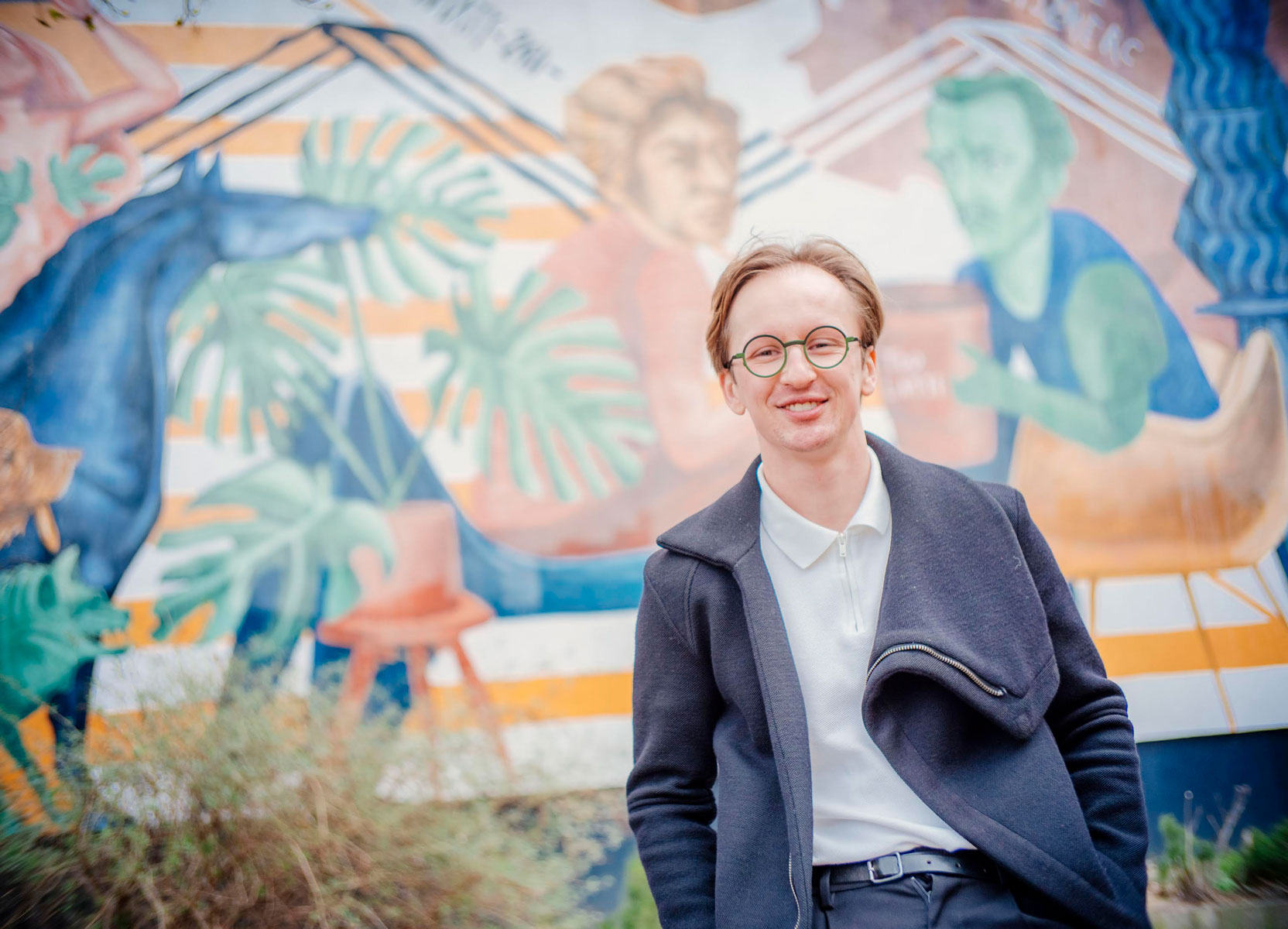


What can a neighbourhood councillor do?
Act as a voice for local residents.
And what does acting as such a voice entail?
Whenever the city puts forward proposals, be it for pavement construction or changes to a tram route, it invites our feedback. In our role as elected councillors, we review these proposals and respond accordingly: offering our backing, voicing objections, or recommending adjustments through formal resolutions, which express our opinions. While the city is not bound by these opinions, they are generally expected to be given due consideration as a matter of good practice, particularly as they reflect the views of the residents, which in my case are those living in the Jeżyce district. The council may also put forward its own ideas, highlighting concerns such as disruptive noise or areas that may pose safety concerns and that require particular attention.
Do you have a budget to draw on?
We do, although it is relatively limited compared with the city's overall funding. Even so, it is sufficient to support smaller-scale improvements and host a handful of social and cultural events each year, including "Summer in Jeżyce'. It is worth noting that part of this funding comes from parking fees collected in the neighbourhood.
Are residents interested in elections for the housing estate council?
The turnout in Jeżyce in the most recent elections was roughly four percent, which is undeniably low. That said, we're not disheartened and remain hopeful to see an improvement. There's still a great deal to be done to boost public awareness. It's vital for residents to understand that elections don't stop at the level of mayor or city council - neighbourhood councils exist too, and they are arguably the closest to everyday concerns. Much of our work focuses on seemingly minor issues that, taken together, make a tangible difference to the quality of life: an even pavement, a bicycle stand, a newly planted tree, a nice playground, or a comfortable bench.
Is this your first term as a councillor?
Yes, it is - I'm currently in my third year. My involvement began quite unexpectedly, following a chance encounter on the street with someone running for the council. That's when I discovered the existence of neighbourhood councils and became curious. I attended a few sessions of the Jeżyce Neighbourhood Council, which are open to the public, and over time got to know those involved. In the end, with encouragement from Adam Dzionek, chair of the Jeżyce Neighbourhood Council Board, I decided to put myself forward as a candidate.
This work is voluntary, isn't it?
It is - we're not salaried and only provided with allowances to cover the costs that come with being a councillor.
Are you a native of Jeżyce?
No, like many people here, I came from elsewhere. I moved to Poznań from Inowrocław in 2012 to begin my studies and, apart from a short stint in Warsaw, I've remained ever since. I studied International Relations with a focus on diplomacy at Adam Mickiewicz University, as I had plans to enter the diplomatic service. With that in mind, after finishing my undergraduate degree, I moved to Warsaw to pursue a master's degree at the University of Warsaw. Being in the capital allowed me to undertake the internships I was keen on, first at the Ministry of Foreign Affairs, followed by the President's Office. It was a fascinating experience and a valuable learning opportunity.
Let's circle back to Poznań. Why did you choose to come here to study?
It was a combination of factors: the quality of the university, it's convenient distance from Inowrocław, and the fact that several friends from secondary school had already chosen Poznań. That made the transition much easier - I wasn't stepping into an entirely unknown environment. We ended up living in Łazarz and starting afresh, and at one point I also spent a semester in Ghent as part of the Erasmus programme.
A beautiful city.
It is indeed, although I must admit that that experience made me appreciate Poznań, and Poland as a whole, even more. Travelling often has that effect: it allows you to return home with fresh eyes.
What sort of home did you grow up in?
A warm, happy and complete one. I look back on my childhood very fondly. My father was running a business, and my mother devoted her time to raising me, my brother and my sister. I'm the youngest of the three.
Mum's little darling?
Without a doubt.
And a swot?
I'd say I did reasonably well at school. In fact, I'm the first member of my family to enrol in a full-time programme at university.
To study in Poznań, we've covered that. A flat in Łazarz, we've covered that too. So how did you end up in Jeżyce?
That was over a decade ago. Warsaw was exciting, but it's difficult to sustain yourself on unpaid internships. And in truth, I've never been especially career-oriented - I see myself as more of a social activist. So, after three years, I left my small place near Plac Żelaznej Bramy and came back to Poznań.
To your boyfriend?
We first met at a farewell party I threw before leaving for Warsaw. Adam turned up with someone else, and we only got together later, around a year before my return to Poznań. Initially, we were in a long-distance relationship, but it suited us quite well. The train journey isn't long, only two and a half hours, and we got to miss each other, and with flats in both cities, we made it work. Eventually, I decided to come back, partly for Adam, it's fair to say. By then, I was living on ul. Jeżycka in Jeżyce, since that's where he was based.
A good choice?
Of boyfriend? Definitely. Of neighbourhood? Equally so. It's easily the most vibrant district in Poznań, almost a self-contained town. That's what makes it so appealing. Everything is within reach: a market square, cinema, theatre, restaurants, a library, hair salons, bars, shops - everything you might need. In theory, you could never set foot outside it. It truly feels like home. Jeżyce is also strikingly colourful in a social sense - the queer community here is large and visible. During Poznań Pride in June, rainbow flags line many balconies, including ours. There are numerous queer-run venues, as well as a gay bar - Los Maricones. Overall, I feel our visibility in the city comes less from slogans or large-scale demonstrations, though we do have an excellent parade, and more from everyday presence, grassroots activism and running local businesses. That's something I value deeply.
Is there anything you'd change in Jeżyce?
I'd always advocate for more greenery, as it remains relatively scarce in such a densely built-up part of the city. That's why I'm particularly happy about the planned redevelopment of ul. Kościelna, the so-called "oval section', running from the tunnel to ul. Wąska. It is due to be turned into a green, recreational area, suitable for dance nights, open-air cinema, food truck festivals, and the like. This is going to be a major improvement.
And when did you come out?
My sister was the first person I told, and she didn't take it too well at first, so I shared quite a bit of educational materials for her to study. Over time, things improved significantly, and she eventually became my big ally. I came out to my friends at Secondary School No. 1 in Inowrocław, and I must say it was more of a problem for me than it was for them. They were incredibly supportive and encouraged me not to hold back and to be myself, which really helped me grow in confidence. I started to explore gay life and even arrived in Poznań with a boyfriend. I came out to my parents while at university, first to my mum, who, like many mothers, suggested I should wait before telling my father, as he needed preparation time. So, he only learned a few years later.
How did he react?
With silence - a long silence. I ended up moving back to Poznań shortly afterwards. Like my sister and mother before him, my father needed time, and I accept that. Still, I couldn't live as if I weren't gay. My mum was caught in the middle, trying to smooth things over. My father eventually came to terms with it in his own way. In the end, Adam and I were invited to spend Christmas at my parents' home. Today, my father is very fond of my partner. I sometimes joke that if he had to choose between us, he'd pick Adam.
How long have you been together?
It's been ten years now. A very good decade, we're happy together, and we're happy to be in Poznań. We both have corporate jobs and follow a fairly standard weekday routine, Monday to Friday. Saturdays are reserved for chores - shopping, cleaning the flat, preparing lunch - and then getting ready to go out in the evening. We like having friends over for house parties, going to the Castle's film club, and taking walks around Rusałka. At home, when Adam is working on translations - he's a Finnish philologist by training - I'll be gaming, but we're still together, sharing a double desk. I sometimes think that even if we weren't a couple, we'd still be friends.
Does the LGBT+ community play a significant role in your lives?
Living in a city with such a visible, open and diverse LGBT+ community does wonders for our living comfort. This may be even more crucial for young people who are just starting to explore their identities. That's when those rainbow flags on balconies matter the most, just as seeing queer people in bars, cinemas and schools, witnessing people coming out and hearing stories from LGBT+ figures in public life. That's what everyday life in Poznań looks like for us.
I suppose it's also the fact that your being gay wasn't an issue at all when you got involved with the Jeżyce Neighbourhood Council.
Exactly, it simply doesn't register as anything unusual. In Poznań, nobody raises an eyebrow at a gay man running for office, and that in itself is significant. You notice it in everyday life too. In our housing community, for instance, my neighbour and I host social gatherings twice a year: everyone brings food and drink, we put on music, and the atmosphere is nice. That's how we got to know one another - we're not strangers, and everyone knows that Adam and I are a couple. I value that sense of neighbourhood, grassroots involvement and improving the space around us. I like contributing to the communities closest to me, and I feel I get a lot back in return. I believe that small communities can be really strong. The same applies to Poznań's LGBT+ community, although this one is far from small.