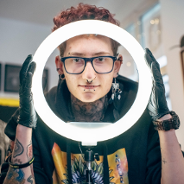
It's weird being on the other side.

What do you mean?

I'm an ethnology major, so I'm usually the one to ask people questions, conduct interviews, and prepare surveys. I'll be finishing my slightly extended undergraduate studies at Adam Mickiewicz University this year.

What made you choose ethnology?

This seemed to be the most fascinating field as well as the broadest-covering psychology, sociology, anthropology, and history. I found that appealing, and I must say, I wasn't disappointed. Especially since I also had this great Gender Studies class with Prof. Agata Stanisz-right around the time I was performing in the queer play Colourful Dreams in Polski Theatre. I even invited my professor to see it, and she really enjoyed it.

Did you ever consider going to art school?

Not really, I think art schools make you create art in a very academic way, and that's just not my thing. I'm more of a self-taught artist with a unique style of my own that I want to develop. I couldn't make art to fit into someone else's vision.

Do you plan to continue studying ethnology?

I do, with a focus on what I already do outside of school, which is tattooing. My thesis is actually about the tattoo artist profession. This subject is close to my heart but also challenging to pursue given how little literature is available for research-my sources are really sparse. In my thesis, I explore the profession in terms of being an artist, a professional, and a craftsman. But I won't lie-I find studying and writing about my community tricky, especially when it comes to being objective. I have to be on my toes to ensure the thesis is both accurate and well-researched.

When did your first take interest in tattoo art?

Back when I was a child. As you might expect, it began with just drawing, and then for about ten years, making henna tattoos-mostly for friends who'd request a dragon, a cat, or something else. That path eventually led me to permanent body marking. I started attending tattoo conventions, slowly immersing myself in that world. Since the beginning of last year, I've dedicated myself to the profession 100 percent and have finally found a studio in which to practice.

Is it hard to get started in this line of work?

Very. The pandemic made it even harder as a lot of people started buying tattoo machines online and tattooing at home, which, as you can imagine, ruined the market. But even aside from that, getting into the profession is incredibly difficult. You have to be patient, especially in building your client base, since people either have their go-to tattoo artists already or are just shopping around for the cheapest option. And in my case, being queer is also a factor.

How so?

Well, despite appearances, the community of tattoo professionals is quite conservative. It's mostly run by straight cis men, which means women also find it hard to break in. This keeps a lot of LGBTQ+ people in the business closeted. I didn't know how people would react to me being non-binary, and was a bit concerned. At Mucha Studio, where I am now working, the team actually asked me themselves about my preferred pronouns, which was really nice and showed me that things are changing for the better-even in this field. Not just in Poland, but internationally, too. There's even a concept of queer tattooing with its own elaborate symbolism. For example, I hear that moth tattoos are very popular among bisexual people.

Do social media help?

Having a portfolio on social media is a must, so of course, I have one. To be honest, keeping my socials up to date is time-consuming and exhausting-but there's no other way. That's how people find out about my work and reach out as prospective clients. It's frustrating though to get requests to copy complete designs found on Pinterest. In such cases, I try to negotiate and encourage people to check out my work and my style. I'm mostly into colourful, old-school tattoos. I steer clear of some styles, such as realism, although when you first start out, turning people down is really hard. You're eager to jump on any opportunity that comes your way.

Is it difficult for a newcomer to get people to pick you to make their tattoos?

It's not easy, but everyone has to start somewhere-and some people are willing to give you a shot, sometimes mainly because the price is low. But of course, I didn't start on human skin-I practiced on artificial skin first. These days, designing is made a whole lot easier if you use a tablet and that's where all my ideas take shape. I spend hours daily sketching on my tablet. Practice makes perfect, and I can see I am making good progress. As do my clients.

You mentioned that your colleagues at the studio wanted to know if you were queer. Do you keep it hidden?

Not really, but when I first joined the studio, I was being cautious. It was new territory, and I didn't know how they'd react. Plus I badly wanted to work there. But my fears turned out to be unfounded, as they quickly noticed that I identified as they/them on social media. At that point, I felt a huge sense of relief, and we started having more conversations about being queer, which was great. Especially since, as I said, homophobia is alive and well in the tattoo world. It's not the open, colourful, and accepting world that people might think, at least not in Poland.

Were you a born-and-raised Poznań queer?

Yes, I am queer and I was born and raised in Poznań. I've always felt different as far as I can remember. Even as a kid, out on the playground, I'd hear things like, "Why is that girl wearing Spider-Man trousers?" I didn't really understand those questions. I wore those trousers because I liked them. And because I wanted to. But as I got older, I was asked more and more of those questions-especially in my teenage years, when I didn't yet know all the different queer identities and terms. It wasn't until high school-and in fact during university-that I started learning about them and meeting other queer people. That's when I realised that I was non-binary and preferred not to be addressed with feminine, but rather with either masculine pronouns or they/them.

How does your family see it?

My family generally tended to avoid uncomfortable conversations, so my queerness was a taboo of sorts. They only stopped buying me dolls when they realised the dolls' heads would always end up ripped off. That's when I started getting cars and dinosaurs, the kinds of toys I actually wanted to play with. No one at home ever asked me about my identity or what pronouns I preferred.

And what about your clothes?

Every now and then, I'd hear how great I'd look in a skirt, but that never worked on me. But I also kept my hair long, down to my waist, and didn't cut it off until my final year of middle school. The hairdresser was devastated, while I was thrilled. Especially since I donated the hair to the Rak'n'Roll Foundation, a non-profit organisation that supports people with cancer.

Was that an act of rebellion?

Probably a little, but my biggest rebellion came later-when I moved out for university. These days, I only stay in touch with my sister, who is transgender and who has also come out. The reason I moved out wasn't specifically my parents failing to accept my non-binary identity but a general lack of acceptance.

Do you expect your relationship with your family is going to take a turn for the better?

I don't think so. I've tried reconnecting, but it didn't work out.

At first glance, you're an odd one out, a very flamboyant figure. How does that affect your daily life?

It has changed over the years. When I was in school, we were required to wear uniforms, and everyone looked the same. The only place I could truly express myself through colours was at home, and that was just for myself. I actually thought everyone did that-dressing in bright colours, wearing makeup, getting piercings and tattoos.

How do you navigate university as a non-binary person?

I have only come out recently, so the process is still ongoing. I definitely got my big push with Colourful Dreams. The play was generally well received. One of my favourite teachers even shared an approving post about it, proudly mentioning we had an actor performing in Polski Theatre in our midst. That gave me a warm fuzzy feeling. These things matter a great deal. I haven't updated my details in the university system yet, so my record still shows a feminine first name, but on campus, I go by the pronouns he/him. With professors, the transition has been fairly smooth. The only real challenge was with those who had known me since I first enrolled-not because they have an issue with my non-binary identity, but simply because old habits die hard. It's a battle against ingrained patterns.

In short, you confuse people.

I always have-people look at me and try to figure out my gender. I see it all the time at shop checkouts when cashiers hesitate and freeze, unsure whether to call me "sir" or "ma'am". To help them out of their embarrassment, I just go ahead and tell them myself. I call such situations "neutral" as opposed to those rooted in homophobia. Things have gotten even more complicated now that I've started taking testosterone, and my voice deepened. It amazes me how stubbornly people cling to binary language-how they must categorise me as either "sir" or "ma'am." Is it really so hard to use neutral language? It costs nothing, makes things easier, and is incredibly important to us, non-binary people.

Did you take long to embrace your non-binary identity?

It took a while. At first, I thought I might be trans, which turned out not to be the case. Even though I'm taking hormones-which many assume is only for trans people-I am non-binary. Testosterone helps me find the middle-ground, exist in between, where I'm most at ease.

Did you run into any difficulties accessing hormones?

At first, I was afraid I wouldn't get them because I wasn't transitioning fully either way. Fortunately, I was able to. I was diagnosed as non-binary and was given access to hormones. But I know many non-binary people struggle with this as some doctors refuse to prescribe microdoses, believing that you should either fully transition one way or the other, rather than stopping short somewhere in between.

Will this cause problems with your official documents?

Sadly, that remains a concern. In Poland, you can only be legally recognised as either male or female. In that sense, trans people have it easier because their change fits into the binary system. But what about non-binary people? The only thing I can do is change my official first name to a gender-neutral one, which is the name I already use. Atlas is both a boys' and a girls' name, so that works in my favour.

Did appearing in Colourful Dreams advance your emancipation?

Absolutely. We were working on the play at the exact time I began to celebrate my queerness, explore my identity, and use my new name. That was also when I left my parents' house and started living on my own. It was undeniably the start of a new chapter in my life-and one in a city that is growing more colourful. And not just in dreams, but in real life.
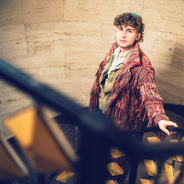
Have you always been this eloquent?

From an early age, I recorded all sorts of things on video. And as you record things, you add spoken commentary. And as you do that, you gain experience. Even in my Catholic primary school, I would moderate school assemblies.

Catholic?

Yes, at Poznań's Blessed Five Salesian School Complex, to be exact.

I would never have guessed you went to a Catholic school.

Its graduates generally fall into one of two groups. One is the people who remain on their knees; members of the other come out determined to sever all ties with Catholicism. It's hard to be somewhere in between. That's how religious education works - you either love it or hate it.

Was there anything you liked about it?

You can't deny that the Salesians knew how to build a sense of community.

You went to their primary school, so it wasn't your choice.

No, it was my parents'. I imagine they were drawn to the school's solid reputation and high rankings, although the religious aspect also played a role. My parents weren't overly devout, but they were believers, and I suppose they wanted to raise me as one too-both believing and practising. As you can see, that didn't quite work out. I left the Salesian school as neither a believer nor a practising Catholic.

How was this school different from others on a daily basis?

Probably in that every day started with a prayer, there was always one church holiday or another to celebrate, which required attending Mass. For instance, we celebrated Angel Day, with everyone getting dressed in white and wearing home-made wings and halos. There were also plenty of tours and rallies because the Salesians have schools all over Poland. A lot of it seems funny in hindsight, but I think these events had great community-building value. I felt part of it-at least up to a point.

What point was that?

When I realised my sexual orientation, I felt increasingly an outsider, mainly because of the teachers, who projected a conservative Catholic worldview. That was the first time I felt unwelcome in the school.

Were there any openly queer students?

There was one, and I watched how that played out. And what I saw was relentless bullying-mainly verbal-from other students, while the teachers did absolutely nothing to stop it. At the time, I didn't fully understand wbhat made me tick yet-I must have been about ten-but I already saw myself as an ally to such people.

What did that mean in practice?

For example, when everyone in class laughed at Conchita Wurst, the "bearded woman" representing Germany in Eurovision, I tried to defend her the only way a child could. I said she looked amazing and that she sang beautifully. I also remember standing up for MP Anna Grodzka when people called her a transvestite.

Weren't you afraid that might make people suspect something about you?

No. I just believed-ironically, shaped by my Catholic schooling-that you should defend those who are weak, and who are attacked and insulted. Back then, I felt firmly rooted in heteronormativity-both through school and my parents. It hadn't even crossed my mind that I might not fit into that mould. Though years later, my mum told me she had always known I was different, because as a child, I used to put on my grandma's pearls and high heels.

Looking at your style now, that all makes sense.

It certainly does now but school was different. We wore uniforms. Honestly, I didn't start dressing more boldly until recently. Even in secondary school, I wasn't daring, and I wasn't some flamboyant figure in the Chartowo district, where I grew up, raised by two women-my mum and my grandma-since my parents had split up. Chartowo is a big housing estate made up of blocks of flats, a bit bleak and colourless, but it always felt safer to me than, say, Łazarz. And that's still true today.

You were born in 2004. You belong to a generation that has never known life without the internet.

That's true-I've been on social media for as long as I can remember. But my parents restricted my internet access, and in hindsight, I'm grateful to them for that. It meant I could develop my creativity and imagination through other activities. My room was full of toys, and over time, it started filling up with amateur film and photography equipment, which became an important part of my life during secondary school. A lot of that was down to my dad-whenever he visited, he often took me to the cinema. Ironically, the pandemic, which hit just as I started secondary school, also played a big role in nurturing my passion. Seclusion and an abundance of spare time encouraged me to experiment with filmmaking.

When did you first come out?

I was about fifteen, about to graduate from primary school. I told my mum, "There's this boy..."-and that's how it started. The boy lived just outside of Poznań, and I wanted to be able to visit him. That's when my mum said she had always known. Even so, she struggled with the idea of me seeing a boy. I suppose it's because I was a bit of a mummy's boy. She was not particularly fond of the LGBT+ community, which she viewed with suspicion, maybe even as a modern-day Sodom and Gomorrah.

Did that affect your relationship?

There's no denying that it became strained. I was trying to explore the world, and that scared the life out of my overprotective mum. I generally felt uneasy about the fact that she didn't fully accept it-that something wasn't quite right, even though on the surface, everything seemed fine. When I later introduced a boyfriend to her in secondary school, I could sense her pulling away. And before we attended our first Pride Parade together, she was hesitant and fearful-mostly, I think, because she worried it would turn into something like the one in Białystok. Long story short, my mum gets anxious about me.

What impact did being part of the community have on you?

A huge one. For the first time, I felt I was among my own people and that I wanted to engage with this community more frequently and more meaningfully. I started going to Lokum on ul. Półwiejska-though, sadly, I had to keep it a secret from my mum. So it was a bittersweet experience: on the one hand, it felt amazing to be there; on the other, I had to lie about where I was. That was when the closet started feeling a bit too tight, and I began coming out to more of my friends at Paderek, the high school I attended.

When did your queer style transformation happen?

It was a slow process. The more confident I felt, the more I experimented-first, a single earring, then another, then a flashier outfit, then painted nails, a bolder hairstyle.

I have a feeling your mum didn't approve.

When she saw my first earrings, she told me to leave the house, take them off, and throw them away-which, of course, I didn't do. I sat on a bench outside, right opposite our window, and then my dad called out, telling me to take them off. I refused-my body, my identity, my rules. My mum had no choice but to let me back in. And just to be clear, this wasn't some traumatic experience for me-I actually found it funny, which is why I tell it as an anecdote now.

How did people at school react?

Not bad at all, quite the opposite, actually. I ended up making more female friends, and I was even elected student council president. I was so involved in youth issues that I was also elected vice-chair of the Youth City Council. Today, I'm on the board of the Varia Posnania Foundation, whose members work to promote student governance and empower young people.

How is your relationship with your mum today?

We're in a completely different place. In 2023, we attended the Pride Parade together, and she absolutely loved it-she had fun, laughed, got emotional, met my friends. People kept coming up to us. It was a breakthrough moment for our relationship-really positive. Last year, we went again, and we're planning to go this year too.

Have you ever experienced hostility in Poznań for being eccentric?

Most of the reactions I get are positive-just once, a few years ago, a guy on a tram harassed me. Of course, sometimes when I head home late at night, I wonder if I should tone it down a bit. But that'd be a dead end. I want to look the way I feel, the way I like to be. Maybe I'll even inspire a young queer person who sees me and realises that it's possible to live this way-because why not? Especially in Poznań, a city that gives me a great sense of comfort and allows me to be who I am. And it's not just how I see it. I love it when, while traveling, someone asks where I'm from, and when I say Poznań, they respond, "Oh, the rainbow capital of Poland!" As a queer native of Poznań, born and raised here, that makes me very proud.

A native of Poznań who's also a university student?

I studied European Law at Adam Mickiewicz University, but it wasn't for me, so I dropped out. Next year, I plan to enrol in journalism. I'm most interested in blending journalism with social media (especially video), an area in which I'm very active, as you are well aware. I make short-film content, but I'm also working on something bigger-a documentary film about Poznań's Pride Parades. This project helps me hone my skills and is also a way to explore history that would otherwise feel distant and unfamiliar. I want to understand that history, because we're building on what previous generations have fought for. Poznań didn't become a rainbow city overnight-it's important to know how it all got started.

What has making this film taught you?

That this queer-friendly world is actually quite new. And that Poznań used to be very conservative. I never experienced that side of it, so it's hard for me to even imagine. I was shocked to see footage of the early Pride Parades. They were held in autumn with scarce turnout, and they faced fierce attacks. It feels quite unreal that the Poznań of my birth and today's Poznań are one and the same.

I planned to open by asking how old you were, but was afraid I'd get the standard 'never ask a lady her age' reply.

I don't think a quick glance at me can reveal my age.

Indeed, when I look at you, "senior' isn't the first word that comes to mind.

And yet, I'm sixty-four years old, retired, and finally have time to focus on myself.

So, let's do just that and focus on you. Where are you from?

My family roots are tangled, but my parents met in Wrocław, fell madly in love, and got married only a few weeks later. You're now looking at the result of that union. I was born near Wrocław, which is where my mum's sister used to live. That's where I grew up and attended an amazing primary school. After I graduated, we moved to Poznań, where I enrolled in a secondary school and then university. One of my best teenage experiences was Pro Sinfonica, which operates to this day as part of the Poznań Philharmonic. I used to go there with a friend who, interestingly enough, told me years later that I was the only reason she chose to attend.

Anything besides music?

To be honest, I was mostly obsessed with my studies. Apart from that, it was just music, girl scouts, and Christian charismatic renewal movements.

So, a model, God-fearing student.

Yes, with a deep devotion to God instilled in me at home.

What was your family home like?

I suppose that today one would describe it as borderline abusive, though I didn't realise that at the time. I don't have fond memories of it-my father was an alcoholic, often aggressive, and my mum and I would often flee to escape from him.

Any queer life?

Queer culture was underground in the mid-70s and I had no idea it even existed.

Which letter in our LGBTQ+ rainbow are you?

I can't even answer that for myself. I'm still in the process of self-identification. That doesn't mean I hadn't, so to speak, grappled with the matter. I've always felt I was different in some way. I remember when, on coming back from a countryside holiday at my grandparents', where I joined my female cousins, I announced to my mum that when I grew up, I'd marry one of them.

What did your mum say?

She let it slide at the time, but when I raised it again sometime later, she told me it wasn't normal and that we needed to see a doctor. I must have been about five then, so when I heard about that doctor, I decided I would never raise that with mum again. That didn't mean I stopped thinking that way, though. But the fear that it was unhealthy, abnormal, was so strong that I never brought it up again-though, of course, I still felt I was different.

Was the Church oppressive in all this, or was it your refuge?

I didn't see the Church as oppressive then. Quite the opposite, I believed in its mystical power. having bought into the popular narrative, I thought there was something wrong with me. I assumed that a convent was my best option, not even as a way to escape the world, because I was genuinely into religion. I prayed to God to "heal" me.

Did you cross the convent threshold?

Nope, but the story gets way more dramatic, like something straight out of a movie. Under social pressure, I found myself a boyfriend at university, and after nearly three years together, we decided to get married. I was twenty-one at the time. But then, during an off-campus placement at a Toruń poultry plant, while studying food technology at the Poznań University of Agriculture, I met a girl I really liked. Meeting her was unlike anything I had ever experienced with a man, including my fiancé.

Jesus Christ, and then what?

I went straight to church, grabbed a nun by the altar, and confided in her. I was in this utterly bizarre state of mind, completely confused about what was happening to me. I didn't even know something like that was possible. Sheer madness.

How did it end?

I called off the wedding, even though the invitations had already been sent out, and, following the nun's advice, decided to go to a convent near Przemyśl where I planned to take some time to sort it all out.

And your fiancé?

I didn't tell him about the girl. I just said that I had experienced something that completely threw me off the path we had chosen together and that I needed time to figure things out. I told him the best place to do that would be in a convent. To be honest, he surprised me by taking it in stride, or at least that's how it seemed to me. I felt like we were both trying to live up to society's expectations rather than our own.

Did you ever make it to the convent?

I never got the chance because at the crack of dawn on the following day, while we were all sound asleep in the Toruń dormitory, a loud banging on the door jolted us awake. It was my parents. They had taken a taxi from Poznań to drag me back home and put me under house arrest. They told me they wouldn't let me out of their sight until I changed my mind about the wedding.

So, your fiancé wasn't as understanding as you thought he was, he went straight to your parents, and together they staged the whole intervention?

Exactly. And you know, when I tell this story to my friends or to you now, I can hardly believe that I have actually lived through it and that I was so naïve. Anyway, in the end, under enormous pressure from my whole family, I agreed to the wedding on the condition that I would first finish my internship. So, I went back to Toruń, spent a few wonderful days with the girl, returned to Poznań, and got married. In the cathedral, no less.

That must have been such a traumatic day for you.

I remember that after taking my marriage vows at the altar, I turned around, looked at my entire family, and saw an immense relief on their faces. And I thought to myself: Alicja, what have you done?

You pleased everyone except yourself.

And I didn't stop trying to keep pleasing everyone. I worked really hard on being a good wife. We even joined a family ministry group, and after five years, in 1986, our daughter was born.

Were you ever happy in that marriage?

I don't know. I definitely wanted to do my best with the choice I had made. I think we had some good moments, but I don't think there was ever real trust between us, we were never friends. I'd say our marriage was more like a contract, with some good moments along the way.

Did the Church help you with that?

I believed it did. I had no other choice. That lasted throughout the entire 1980s.

Were you in Poznań the whole time?

I was there until the 1990s, when we moved to Germany. My husband got a scholarship there while my whole world was turned upside down. We lived on campus, and I met a woman with whom, this time, I decided to go all in. And in fact, she felt the same way. We were both married to men but completely lost ourselves in each other. I threw myself into it without looking back until I got burnt. Because it turned out she believed in open relationships and was also seeing another woman. That really hurt me. I didn't know nor understood that world. And at the time, though I'm ashamed to admit it now, I thought to myself: This is what same-sex love must be like-fleeting and doomed to fail. Which aligned with what I had always been told growing up-that relationships like this are a one-way ticket to pain.

How did that story end?

After three years, we moved back to Poznań and tried to continue living together. But then I met another woman. And that sealed the deal-our marriage was done. I wanted a divorce-and, importantly, my daughter, who was thirteen at the time, supported me in that choice. That must have been around the year 2000.

Did she know why you were getting divorced?

Yes, I told her myself. She was very supportive. I even remember her saying once, "If I hadn't pushed you, you'd never have left him." She may well have been right.

How was life without your husband?

Not easy at first, because I let him keep the house we had built together. That was punishment for my "sin." My daughter and I moved into a tiny studio flat, and I had to start all over again in my forties. But we pulled through.

Were you in a relationship with a woman at that time?

I was, with the one who was ultimately the reason for my divorce. Our relationship lasted a few years, until I left for work in Hamburg in 2007. I lived there for almost a decade and came back to Poznań in 2016.

By then, Poznań had become a completely different city.

I hardly noticed, being fully removed from it all. It wasn't until I retired, my mother passed away, and my daughter became more independent, and we each went our own way, that I started working on myself. And that work is still ongoing.

Was joining the Rainbow Seniors group run by Stonewall part of that?

I'm open-minded and always searching. I remember attending a meeting at Stonewall back when it was still in the Jeżyce district. Needless to say, no one was even close to my age. That didn't bother me much, but naturally, we all tend to look for peers. It was actually my daughter who told me about the seniors' group. "Why don't you check it out?" she suggested. And I did.

How do you feel among them?

Despite its small size, the group energises me hugely. For the first time in my life in Poland, I feel I can be myself. We have also visited the Rainbow Seniors group in Wrocław. I hope-and truly believe-that more groups like this crop up, especially in Poznań. There are so many older LGBTQ+ people who live secluded lives and never make it to clubs or parades.

Have you ever attended the Equality Parade?

I'm planning to this year for the first time. It has taken me a while because-as you've probably noticed-I do everything at my own pace, and it's hardly a reckless one.

Are you single now?

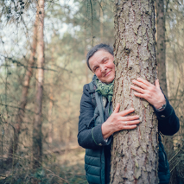
There are three of us now, me, my dog, and my cat, living in a little house outside Poznań. But I'm not ruling out the possibility that someone might come into my life again one day. I'm ready to roll with whatever life throws my way. I am forever on a journey, striving to self-improve. I can finally tell the little Alicja in me that I love her and that there's nothing to be afraid of anymore. Of course, I didn't get here on my own. I've come across many wonderful people along the way, and I've removed the Church from my life, because I consider it abusive. I'd rather hug trees and enjoy life these days. And you know what? I owe it to both of us to finally be unapologetically honest and to say, for the first time in my life: Yes, I am a lesbian.

Liczba wyników na stronie
10